
Gymnosporia buxifolia
Gymnosporia buxifolia
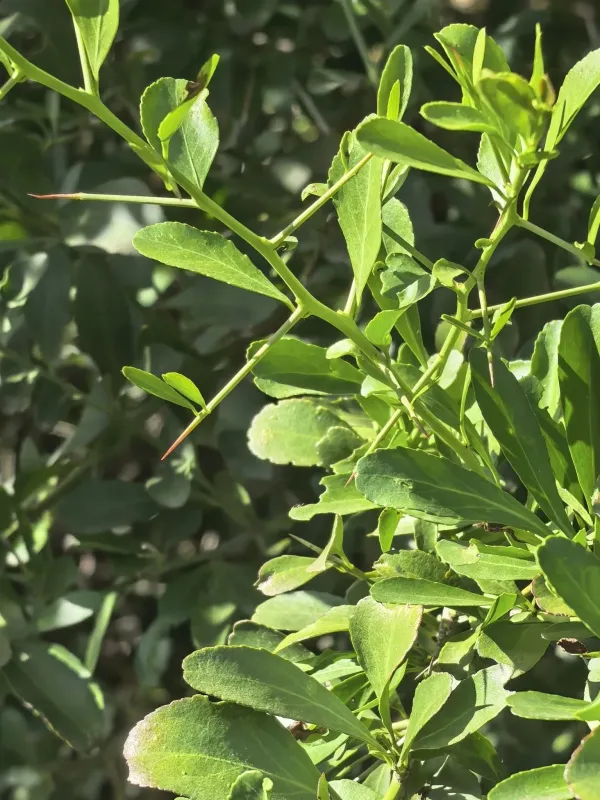
Description
Growing requirements
Gymnosporia buxifolia is a hardy evergreen shrub belonging to the Celastraceae family. It is widely recognized for its dense growth habit and the presence of long, sharp spines, which provide natural protection and a unique aesthetic appeal in garden settings.
Native to Southern Africa, this plant is well-suited for warm climates where it can thrive in full sun exposure. It is highly valued for its resilience and ability to withstand the environmental stressors common in its native habitat, including occasional dry spells.
The cultural requirements demand well-drained, fertile soil to ensure vigorous growth. While the plant can adapt to various soil types, providing a substrate rich in organic matter will significantly improve its vitality and leaf color throughout the growing season.
In terms of maintenance, pruning is essential for managing the size and shape of the shrub. Because of its dense branching and thorns, regular trimming helps to keep the plant in a desirable form and promotes a healthy airflow through the internal canopy.
The plant is primarily used as an ornamental feature or an impenetrable hedge. Its ecological utility extends to providing shelter for small wildlife, making it a functional addition to biodiversity-focused landscapes, while its drought tolerance makes it low-maintenance.
Main diseases and pests
Pests such as scale insects are the most common concern, attaching themselves to the stems and leaves. Regular monitoring during the warmer months and the application of horticultural oils or targeted insecticides are effective methods for controlling these infestations.
Fungal issues, including powdery mildew, may occur if the plant is grown in areas with poor ventilation or high humidity. Ensuring proper spacing between plants and keeping the foliage dry are key preventative measures to keep the shrub healthy and disease-free.