
Gymnosporia engleriana
Gymnosporia engleriana
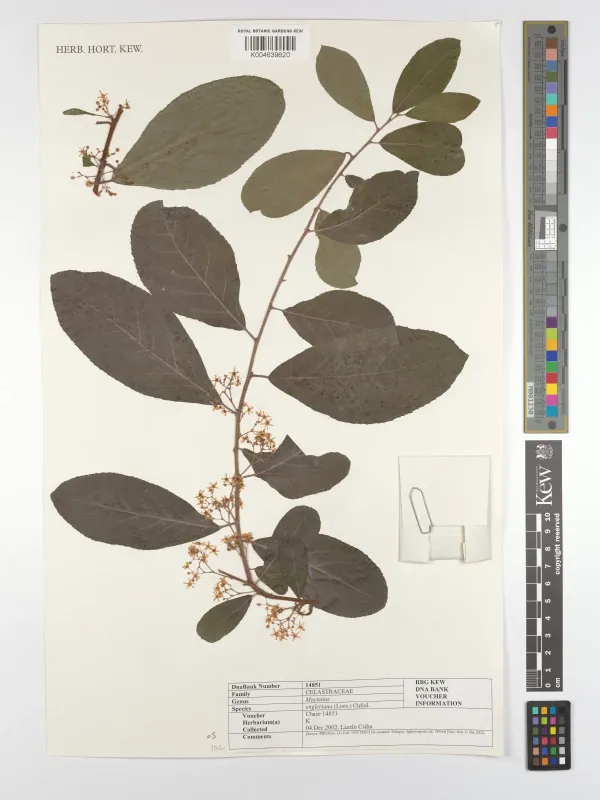
Description
Growing requirements
Gymnosporia engleriana belongs to the Celastraceae family and is native to the arid landscapes of Southern Africa. It is a resilient woody shrub that has evolved to thrive in environments with seasonal drought.
The plant requires well-drained, sandy, or rocky soil to prevent root rot. It performs best in substrates that mimic its native habitat, maintaining a neutral to slightly acidic pH level.
Sunlight is a critical factor for this species; it requires full sun exposure to maintain its compact growth habit and produce vigorous foliage throughout the growing season.
Temperature management is essential, as the species is sensitive to prolonged frosts. In colder climates, it is typically managed as a container plant and moved indoors during winter months.
Watering requirements are moderate. During the peak summer heat, regular deep watering is beneficial, provided the soil allows for rapid moisture dissipation afterwards.
Main diseases and pests
Root rot is the most significant threat to Gymnosporia engleriana, primarily caused by overwatering or poor drainage. Ensuring excellent soil structure is the best preventative measure.
Pests such as scale insects and spider mites are common, especially when plants are kept in indoor conditions where airflow is restricted and humidity is low.
Powdery mildew may occur on the leaves if the ambient humidity is high and circulation remains poor, which can lead to significant aesthetic and physiological damage.
Root-knot nematodes can weaken the plant's structural integrity, so using sterile soil mixtures is recommended to protect the root system from infestations.
Mechanical damage to the branches can lead to fungal entry points. Always use sharp, sterilized pruning shears to prevent the spread of diseases between individual plants.