
Gymnospermium odessanum
Gymnospermium odessanum
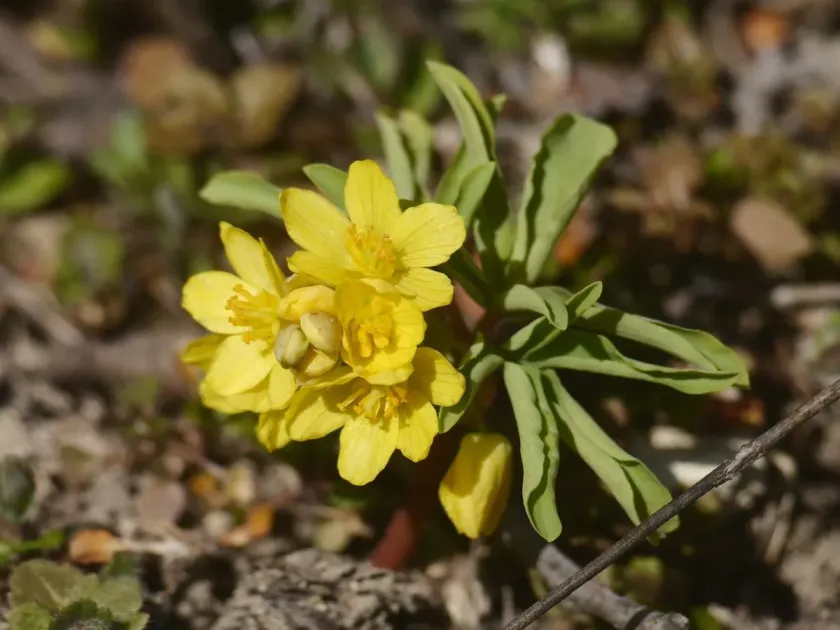
Description
Growing requirements
Gymnospermium odessanum is a perennial herbaceous plant belonging to the Berberidaceae family. It is classified as a spring ephemeral, meaning its active growth cycle is confined to the early spring season, after which the plant enters dormancy until the following year.
Botanically, the plant features a tuberous rhizome that stores nutrients, allowing for rapid emergence and flowering. The foliage is characteristically dissected, and the flowers are vibrant yellow, appearing in loose terminal racemes that bloom briefly during March and April.
The plant is native to specific steppe regions, primarily located in parts of Ukraine and Moldova. It prefers undisturbed, semi-natural grassland habitats, such as slopes and ravines, where the soil structure remains stable and free from intensive agricultural processing.
Regarding soil requirements, Gymnospermium odessanum thrives in well-drained, nutrient-rich soils with a neutral to slightly alkaline pH. It is highly intolerant to waterlogging; therefore, gravelly or porous soil compositions are ideal for maintaining the health of its root system.
Climatically, it is adapted to temperate steppe conditions. It exhibits high winter hardiness, as it is fully protected during the coldest months by the soil cover. Its development is triggered by increasing temperatures and moisture availability immediately following the snowmelt.
Main diseases and pests
The primary threats to this species are habitat loss and degradation caused by urban development and agricultural expansion. Fragmented populations are highly susceptible to local extinction due to their limited dispersal capabilities and reliance on specific ecological niches.
While the plant is not typically subject to agricultural pests, it may be affected by soil-borne fungal pathogens if moisture levels remain too high for extended periods. Protecting the natural soil integrity is the most important factor in preventing these botanical threats.