
Fragrant orchid
Gymnadenia conopsea
Description
Growing requirements
The Fragrant orchid (Gymnadenia conopsea) is a perennial herbaceous plant belonging to the Orchidaceae family. It is a species with complex biological needs, relying heavily on specific mycorrhizal fungi in the soil for seed germination and successful nutrient uptake throughout its lifecycle.
The plant thrives in moderately moist, well-drained, lime-rich or neutral soil environments. It is naturally found in damp meadows, woodland glades, and calcareous slopes where exposure to light is optimal for its development.
In terms of agricultural management, this species is notoriously difficult to cultivate outside its natural habitat. It requires high environmental stability, as it is extremely sensitive to fluctuations in soil pH and the depletion of essential soil-borne symbiotic microorganisms.
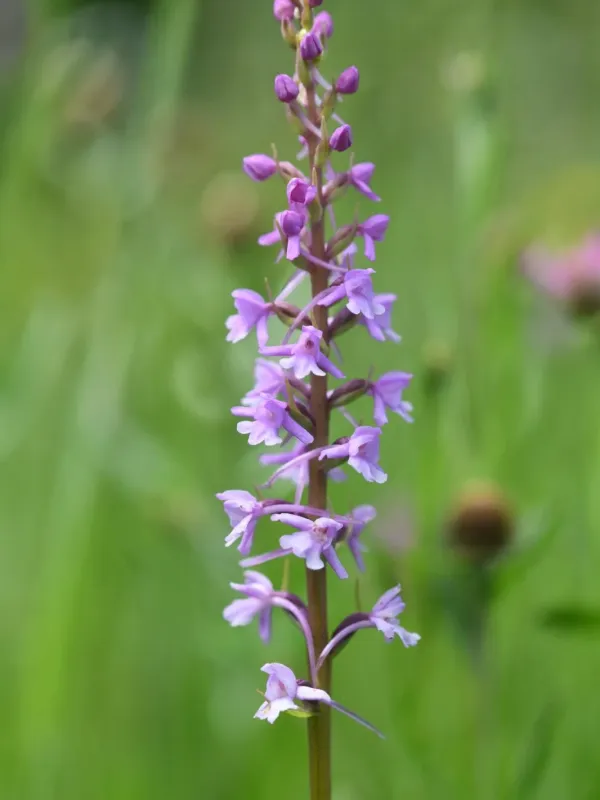
Botanically, it is characterized by palmate root tubers and a dense, spike-like inflorescence. Its flowers are typically pink or purple and are highly regarded for their intense, pleasant fragrance, which is often compared to vanilla or cloves.
Economically, the species is historically significant for its tubers, which were once gathered to produce salep, a nutrient-rich substance used in traditional medicine and cooking, though modern usage is strictly limited due to conservation status.
Main diseases and pests
The primary threats to the species include fungal infections that disrupt the essential mycorrhizal relationship, often caused by poor drainage or stagnant water conditions that hinder root respiration.
Pests such as various herbivorous insects can severely damage the flower spikes, affecting seed production. Furthermore, land management practices like overgrazing pose a significant threat to the survival of the tubers and the maintenance of the delicate habitat.