
Gustavia augusta
Gustavia augusta
Description
Growing requirements
Gustavia augusta belongs to the Lecythidaceae family, commonly found in the humid tropical forests of South America. It is an evergreen tree that thrives in environments characterized by stable, high temperatures throughout the year.
The plant requires deep, fertile, and well-drained soils rich in organic matter to achieve optimal growth. Being a strictly tropical species, it cannot tolerate frost or prolonged drought periods, which restricts its cultivation to specific climatic zones.
High relative humidity is essential for the tree's health, ideally ranging between 70% and 80%. While the tree can tolerate partial shade in its juvenile stage, it generally performs better in locations with sufficient sunlight exposure.
The soil structure must facilitate aeration, as waterlogged conditions often lead to root rot and other physiological disorders. Successful integration into agricultural systems requires careful management of the local microclimate.
This species is often utilized in agroforestry setups, providing structure and biodiversity to mixed plantation systems, which helps maintain the ecological balance of the site.
Yield
The fruit of Gustavia augusta is historically significant as a food source, with seeds that are consumed after proper processing. These fruits are highly valued for their nutritional components in regional diets.
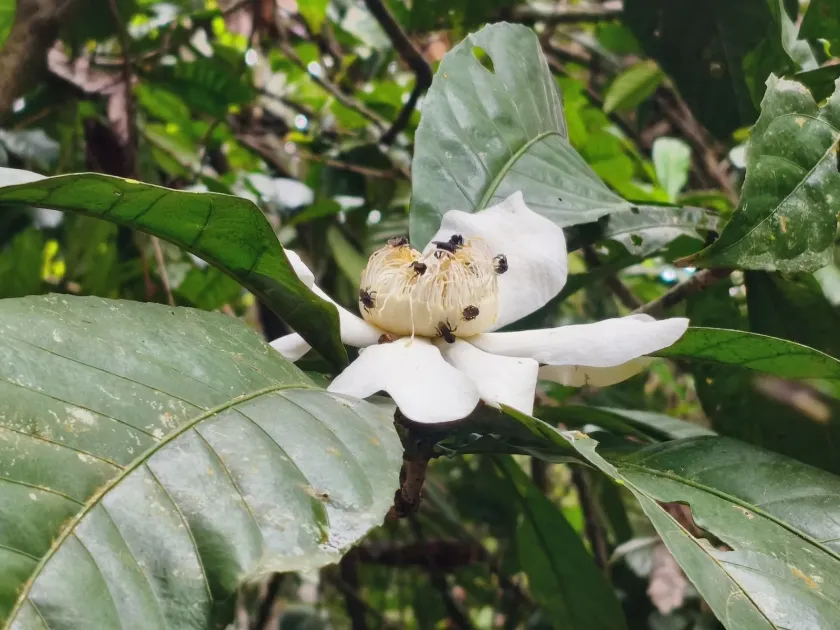
Flowering is a notable feature, producing large, showy, and fragrant blossoms that serve as a critical resource for local pollinators, including bees and various bat species. The aesthetic value of the tree also contributes to its popularity in tropical landscaping.
The wood of this tree is known for its remarkable density and durability, making it suitable for crafting household implements and small carpentry projects that require resistance to humidity.
Various parts of the tree, particularly the leaves, are utilized in traditional medicine due to their inherent therapeutic properties, providing local communities with a source of natural remedies.
Harvesting is typically conducted by gathering the fallen fruits from the ground, ensuring that they have reached peak maturity before being collected for processing or local trade.
Main diseases and pests
Fungal pathogens associated with damp soil conditions represent the primary threat to the health of Gustavia augusta. Poor drainage is the most frequent cause of root-related mortality in nursery settings.
Insect pests, specifically lepidopteran larvae, can cause severe defoliation during the growing season. Integrated pest management strategies are often necessary to protect the tree canopy from excessive damage.
Nematode infestations pose a significant risk to the root systems of younger saplings, necessitating the use of disinfected soil media and careful site preparation prior to transplanting.
Wood-boring beetles can compromise the integrity of the trunk, creating entry points for secondary infections that can weaken the overall structure of the tree over time.
Heavy colonization by epiphytic flora may pose a structural challenge, as the added weight can increase the risk of branch breakage during high-wind events typical of tropical regions.