
Guadua amplexifolia
Guadua amplexifolia
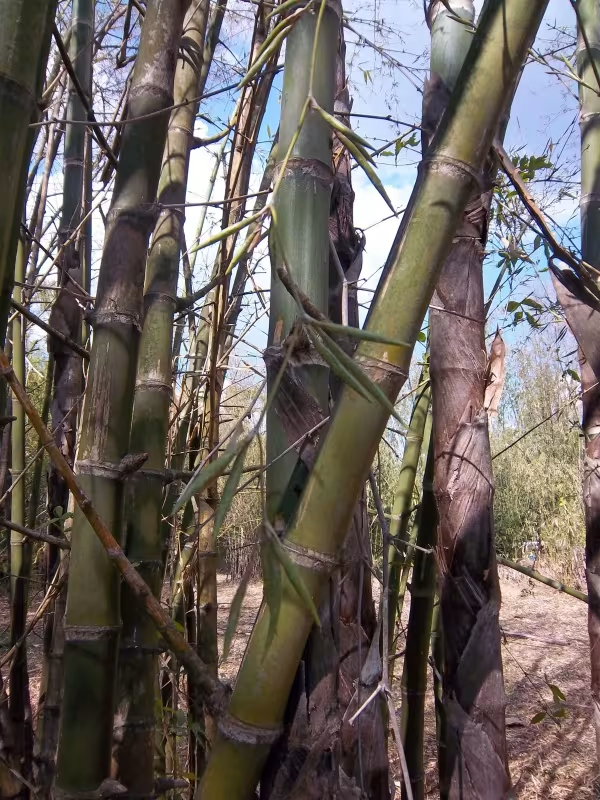
Description
Growing requirements
Guadua amplexifolia is a large, tree-like bamboo belonging to the Poaceae family, native to the tropical regions of Central and South America. The plant thrives in tropical zones characterized by high annual temperatures and abundant rainfall.
Successful cultivation requires well-drained, fertile soils rich in organic matter. An optimal soil pH ranging from slightly acidic to neutral promotes better nutrient uptake and ensures vigorous growth of the bamboo clumps.
While the plant requires significant sunlight, young shoots may tolerate partial shade during their initial growth stages. Protection from strong winds is essential to prevent mechanical damage to the maturing culms.
Maintaining stable soil moisture is critical in commercial plantations. Although the plant shows some tolerance to temporary flooding, persistent waterlogging in the root zone is detrimental to its development.
The climate must be consistently warm, as the species is highly sensitive to frost. Consequently, its effective cultivation range is restricted to tropical and sub-tropical environments.
Yield
The economic value of Guadua amplexifolia lies in its durable culms, which possess exceptional mechanical properties. They are widely utilized in structural engineering, furniture manufacturing, and interior design.
In many regions, this bamboo species is a cornerstone of sustainable architecture, providing a low-cost and renewable alternative to traditional building materials.
Beyond structural use, the biomass is explored for cellulose production and as a feedstock for bioenergy, highlighting its potential for green industrial applications.
The plant also plays a vital role in soil conservation, as its extensive root system effectively stabilizes slopes and prevents erosion in hilly agricultural landscapes.
Strategic harvesting of mature culms ensures the long-term productivity of the plantation, allowing for multiple harvest cycles over several decades without replanting.
Main diseases and pests
The primary biological risks involve wood-boring insects, which can compromise the structural integrity of the culms by tunneling into the inner tissues.
Fungal diseases are more prevalent in plantations where humidity levels are high and air circulation is restricted due to excessive plant density.
Proper spacing during planting is a recommended strategy to improve airflow and increase sunlight penetration, which helps mitigate the risk of pathogen development.
Young, succulent shoots are particularly attractive to rodents, requiring monitoring and protective measures during the establishment phase of the plantation.
Good agricultural practices, such as the routine removal of dead foliage and diseased culms, are essential to maintain plantation health and reduce the risk of widespread pest outbreaks.