
Goodenia humilis
Goodenia humilis
Description
Growing requirements
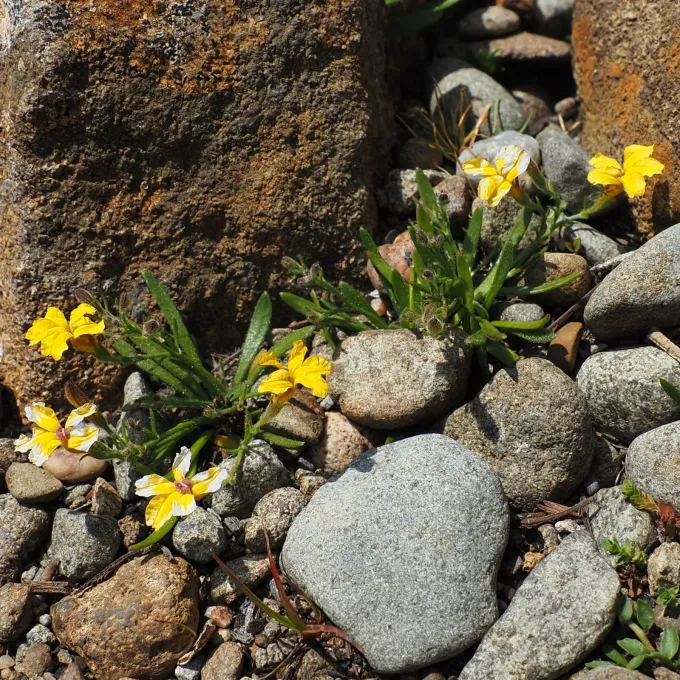
Goodenia humilis, commonly known as swamp goodenia, is a perennial herbaceous plant belonging to the Goodeniaceae family. It is native to Australia and is primarily found in wetland environments, such as swamps, creek banks, and moist grasslands.
As a cultivation subject, it is highly valued for its ground-covering abilities. The plant forms a basal rosette of succulent-like leaves and produces attractive yellow flowers on short, upright stems, making it ideal for bog gardens or riparian landscaping.
The plant requires consistently moist soil to thrive. While it is adapted to saturated conditions, it performs best in soils with good drainage properties to prevent the root rot commonly associated with stagnant, waterlogged environments.
Regarding climate, Goodenia humilis prefers temperate conditions with ample sunlight. It is not frost-tolerant and requires protection if grown in areas with harsh winters, as extreme cold can damage the crown of the plant.
Soil management should focus on maintaining a slightly acidic to neutral pH level. Integrating organic matter into the planting site mimics its natural environment and supports the development of a healthy, sprawling root system.
Main diseases and pests
The primary threats to Goodenia humilis are fungal pathogens, specifically those causing root and crown rot. These issues usually arise when the growing medium lacks proper aeration or remains excessively damp during cooler periods.
Slugs and snails represent the most significant pest pressure, as they are attracted to the succulent foliage of the plant. Damage can be significant during humid springs or in areas with dense vegetation coverage.
Cultural control remains the best defense against diseases. Maintaining appropriate spacing between plants ensures that the foliage dries out quickly after rain, reducing the incidence of mildew and bacterial infections.
In greenhouse or controlled environments, aphids can occasionally infest the flower stalks. Monitoring these areas during the flowering stage is essential for maintaining the overall vigor of the culture.
Regular maintenance, including the removal of yellowing or damaged leaves, helps prevent the build-up of decaying organic matter, which can serve as a reservoir for pathogens within the planting bed.