
Ivy-leaf goodenia
Goodenia hederacea
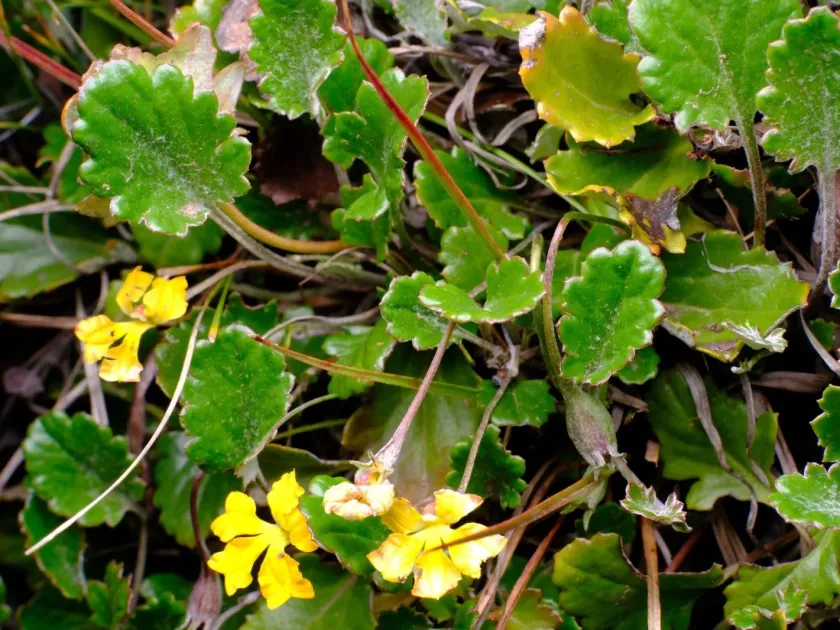
Description
Growing requirements
Ivy-leaf goodenia (Goodenia hederacea) is a herbaceous perennial plant native to Australia, belonging to the Goodeniaceae family. It is widely valued in horticulture as an effective ground cover that creates dense, green mats in landscape settings.
The plant is defined by its creeping stems that readily root at the nodes. Its foliage is ivy-shaped, usually with scalloped margins, which provides aesthetic appeal throughout the growing season. The plant produces distinctive yellow, fan-shaped flowers that bloom in clusters.
For successful cultivation, Goodenia hederacea requires well-draining, moisture-retentive soil rich in organic matter. It thrives best in slightly acidic to neutral soil conditions, which mimic its natural woodland habitat.
Climate requirements focus on mild to moderate temperatures. While it is adaptable, it prefers shaded or semi-shaded locations. Excessive heat and intense sunlight can cause leaf scorching and soil desiccation, making afternoon shade essential in warmer climates.
Agricultural management involves consistent watering, especially during dry spells. In cold regions, this plant is treated as an annual or grown in pots to protect it from frost, as its shallow root system is susceptible to winter damage.
Main diseases and pests
Fungal pathogens, particularly root rot, represent the primary threat to ivy-leaf goodenia. This issue almost always stems from poor drainage or overwatering, which creates an anaerobic environment unfavorable for the plant's health.
Garden pests such as slugs and snails are highly attracted to the soft, succulent foliage of the plant. Implementation of organic barriers or strategic trap cropping is often necessary to prevent significant defoliation during the growing season.
Aphid infestations may occur in dense plantings with poor airflow. Regular monitoring of the underside of the leaves is advised, and infestations can usually be managed with gentle horticultural soaps or high-pressure water sprays.
Nutritional imbalances, such as nitrogen deficiency, can lead to stunted growth and yellowing. Balanced slow-release fertilization should be applied at the start of the spring season to support vigorous growth.
Weed management remains crucial, particularly in the establishment phase. As a relatively slow-spreading ground cover in its early stages, it requires manual weeding to prevent competitive species from overwhelming the newly planted area.