
Gonolobus stenanthus
Gonolobus stenanthus
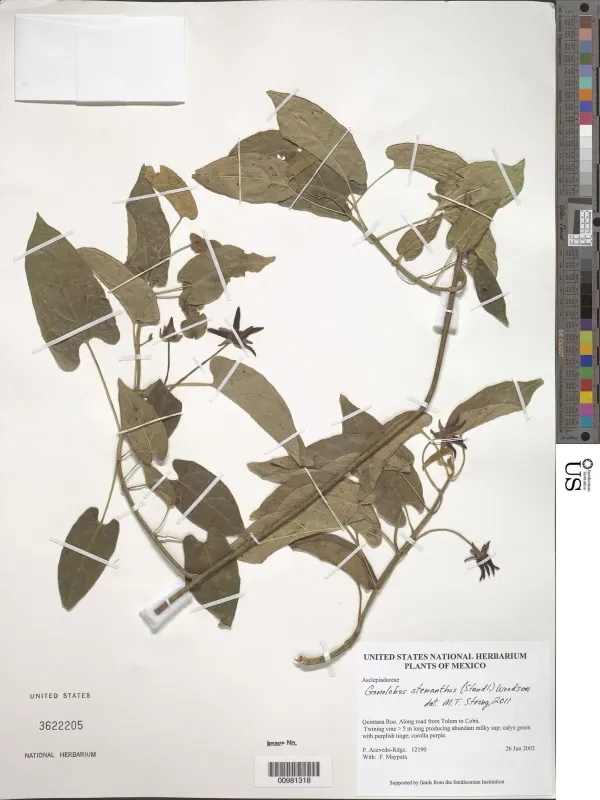
Description
Growing requirements
Gonolobus stenanthus is a perennial herbaceous vine belonging to the Apocynaceae family. It is native to the tropical and subtropical regions of Central America, where it thrives in humid environments.
The plant requires fertile, well-drained soil with a neutral to slightly acidic pH. Proper drainage is crucial to prevent root rot, as the plant is sensitive to waterlogged substrate conditions.
Climatically, it prefers stable warm conditions. Cultivation is generally restricted to greenhouses or controlled indoor environments in regions outside the tropics, as the plant cannot tolerate frost.
Agronomic management involves providing sturdy vertical support, as the plant is a vigorous climber. Proper trellising ensures better light interception and air circulation, which are vital for healthy foliage.
Light requirements include bright, indirect sunlight. Intense direct exposure can damage the leaves, while insufficient light can stunt growth and prevent the plant from reaching its full physiological potential.
Main diseases and pests
In greenhouse settings, Gonolobus stenanthus is susceptible to common pests such as spider mites, which flourish in dry, low-humidity environments often found in controlled spaces.
Mealybugs are another persistent threat. These pests typically colonize the leaf axils and stems, extracting plant sap and leading to yellowing, distortion, or premature leaf drop.
Fungal pathogens pose a significant risk, especially when the soil remains too wet or when humidity levels are excessively high without adequate ventilation to allow foliage to dry.
Preventive strategies include maintaining clean growing conditions, implementing regular scouting for pests, and ensuring proper spacing between plants to optimize air movement.
Chemical control measures should be applied carefully and only when necessary, using products appropriate for exotic indoor plants to avoid toxicity issues during development.