
Gnidia polystachya
Gnidia polystachya
Description
Growing requirements
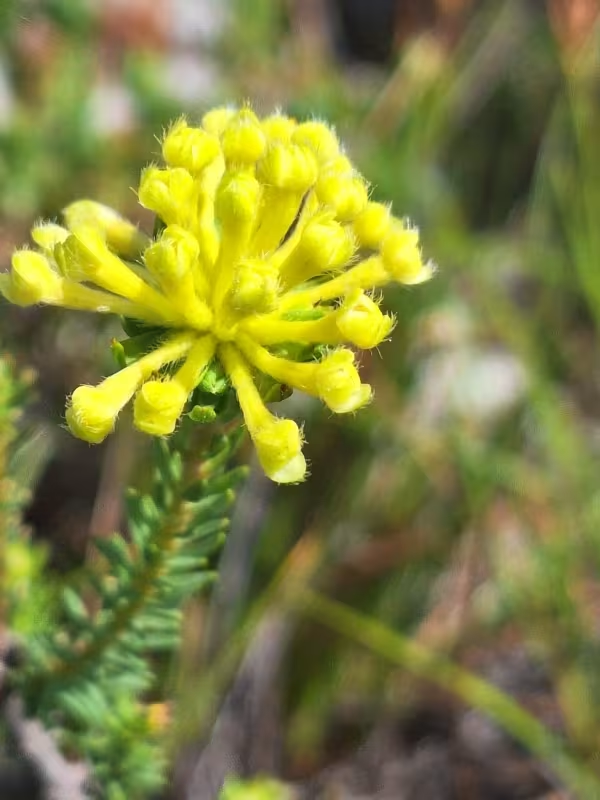
Gnidia polystachya is a distinctive perennial shrub belonging to the Thymelaeaceae family. Native to the diverse landscapes of South Africa, it has adapted to survive in environments that are often characterized by nutrient-poor, rocky, and well-draining soils.
The plant features slender, upright stems densely covered with narrow, linear leaves. During the flowering season, it produces terminal clusters of small, fragrant, yellow-to-orange flowers that are highly attractive to local pollinators.
Successful cultivation requires soil that mimics its natural habitat—specifically, a light, sandy medium with an acidic to neutral pH. Providing excellent drainage is the most critical factor, as stagnant water will inevitably lead to root system failure.
In terms of climate, Gnidia polystachya thrives in full sun exposure. It demonstrates significant resilience to dry conditions once established, but it should be protected from extreme frost, as it is not fully hardy in colder temperate regions.
Maintenance involves periodic pruning to keep the shrub from becoming woody and sparse at the base. Fertilization should be handled with extreme care; specifically, one must avoid fertilizers with high phosphorus levels to prevent potential toxicity to the roots.
Main diseases and pests
Root rot is the most common threat to this species, particularly when planted in soil with poor aeration or high moisture retention. Preventing waterlogging is the primary defense strategy for all growers.
Insect pests, such as spider mites, can become a nuisance during hot and dry spells. These pests typically congregate on the undersides of leaves, causing yellowing and eventual loss of foliage if left untreated.
Mealybugs are also observed in environments with poor air circulation. Effective control usually involves targeted systemic treatments or the careful application of horticultural oils during the early stages of an infestation.
Fungal diseases like powdery mildew may appear if the plants are crowded together. Ensuring adequate spacing and minimizing overhead watering can significantly reduce the risk of such occurrences.
Nutrient deficiency, particularly manifesting as iron or magnesium chlorosis, is a common issue when the soil pH rises above the optimal range. Regular soil testing is recommended to ensure the substrate remains acidic enough for the plant to thrive.