
Gnidia burchellii
Gnidia burchellii
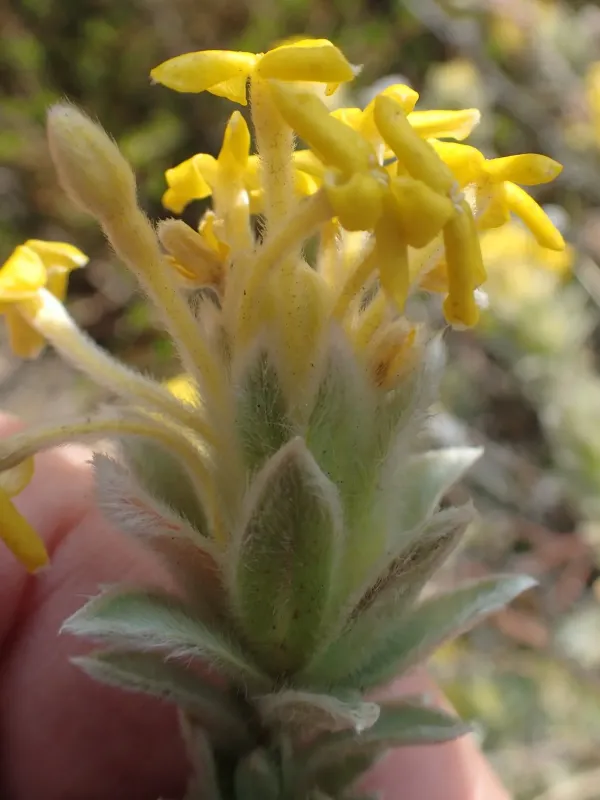
Description
Growing requirements
Gnidia burchellii is a perennial shrub belonging to the Thymelaeaceae family. It is native to the diverse landscapes of Southern Africa, where it has evolved to thrive in arid and semi-arid environments.
Botanically, the plant exhibits xerophytic adaptations, such as sclerophyllous leaves that reduce water loss. Its structure is typically low-growing and shrubby, with a deep root system that allows it to tap into moisture stored in rocky fissures.
The soil requirements for this species are specific: it mandates sandy, well-draining substrates with minimal nutrient accumulation. Soil compaction must be avoided at all costs, as it directly hinders the plant's respiratory processes at the root level.
Climatic conditions for Gnidia burchellii are defined by long sunny periods and moderate rainfall. It is intolerant of frost and excessive humidity, making it suitable only for specific microclimates that mimic its natural habitat on the African plateau.
Regarding its utility, the plant is primarily appreciated in botanical research and xeriscaping projects. Due to the inherent chemical composition of the Thymelaeaceae family, which often contains daphnin and other toxins, it is not utilized for forage or human consumption.