
Gibbaeum velutinum
Gibbaeum velutinum
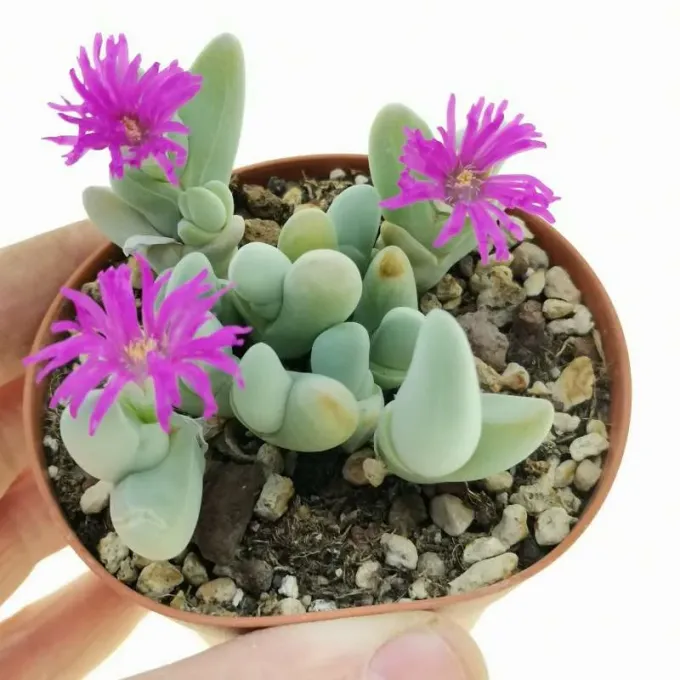
Description
Sowing dates
Seeds of Gibbaeum velutinum should be sown during the spring months to benefit from increasing daylight and optimal temperatures for germination.
It is essential to use shallow seed trays with excellent drainage, as young seedlings are extremely prone to damping-off in stagnant conditions.
The substrate must be very gritty and well-draining, consisting primarily of horticultural sand, crushed granite, and a small portion of perlite.
Seeds should be pressed gently into the substrate and covered lightly with fine grit, followed by keeping them covered until initial germination.
Once seedlings emerge, they must be gradually acclimated to lower humidity levels to develop sturdy, characteristic leaf structures and avoid etiolation.
Growing requirements
As a member of the Aizoaceae family, this plant is native to the arid Cape region of South Africa, thriving in rocky and sandy soils.
The primary requirement for this culture is abundant sunlight, which is necessary to maintain its compact shape and healthy, velvety appearance.
The soil profile must be inorganic, mimicking its natural habitat, with a very low capacity for moisture retention to prevent root rot.
Climatic conditions should favor a distinct wet season for growth and a pronounced dry, cool winter season to induce dormancy and potential flowering.
Proper aeration is critical for Gibbaeum velutinum, as it prevents the buildup of humidity around the leaf bases that can lead to rot.
Main diseases and pests
The most significant threat to the health of the plant is root and stem rot caused by overwatering or poor drainage in the potting medium.
Mealybugs are the most common pests, often sheltering deep between the fleshy leaves where they are difficult to reach with standard treatments.
Spider mites can become a problem in hot, dry environments with poor airflow, causing scarring and discoloration on the delicate leaf surfaces.
Root aphids pose a hidden danger, potentially damaging the root system and causing the plant to suddenly lose its firmness and vitality.
Effective management includes regular inspection and maintaining a strict dry-down cycle for the soil to inhibit the growth of opportunistic pathogens.