
Gibbaeum dispar
Gibbaeum dispar
Description
Growing requirements
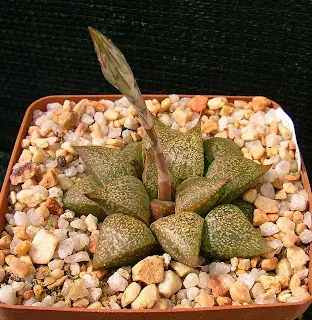
Gibbaeum dispar is a small, fascinating succulent species belonging to the Aizoaceae family. Native to the arid landscapes of the Little Karoo in South Africa, this plant has evolved to store water in its thick, fused, and stone-like leaves, allowing it to survive extreme drought conditions.
In cultivation, the primary requirement for Gibbaeum dispar is direct, intense light. When kept in shaded areas, the plant becomes etiolated, losing its iconic compact, pebble-like structure. It thrives in locations that receive several hours of direct morning or late afternoon sun.
The substrate must mimic the plant's natural mineral-rich, stony environment. A suitable growing medium consists of a mixture of grit, coarse sand, and a small percentage of potting soil, ensuring rapid drainage. A top-dressing of fine gravel is recommended to protect the neck of the plant from excess moisture.
Watering requires strict adherence to the plant's dormant and active cycles. Watering should only occur during the growth phase, while the winter resting period requires absolute dryness. It is crucial to prevent water from accumulating between the leaves to avoid rot.
Temperature management is vital, especially during winter. The plant prefers cooler temperatures during its resting phase, ideally between 10 and 12 degrees Celsius. During the summer, it adapts well to warmer temperatures provided that there is good airflow around the plant to prevent overheating.
Main diseases and pests
The most common disease affecting Gibbaeum dispar is root rot and fungal infections caused by overwatering. These conditions manifest as soft, mushy, or discolored spots on the leaves, which can quickly lead to the complete collapse of the plant structure.
Pests such as mealybugs represent a significant threat. They often congregate in the deep creases between the leaves, making them difficult to detect and eradicate manually. Their feeding activity depletes the plant's resources and leaves it open to opportunistic pathogens.
Spider mites are another concern, particularly in environments with very low humidity and poor ventilation. They pierce the epidermis of the plant, causing scarring and distorted growth that diminishes the ornamental value of the specimen.
Treatment should involve systemic insecticides that are safe for succulents. It is important to apply these treatments during the cooler parts of the day and ensure the plant dries quickly afterward, as high humidity after pesticide application can encourage fungal development.
Preventive measures include regular inspection of the leaf crevices and maintaining an open, airy environment. Keeping the planting area free of debris and ensuring the soil surface is dry before watering are the most effective ways to maintain plant health.