
Gibbaeum petrense
Gibbaeum petrense
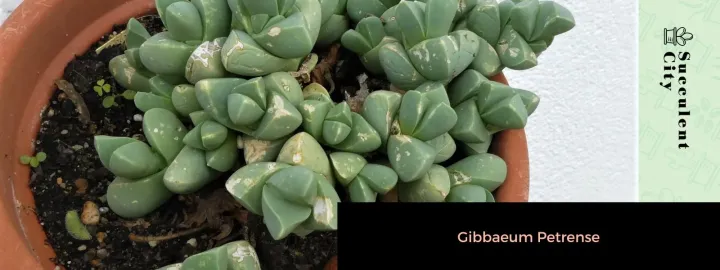
Description
Growing requirements
Gibbaeum petrense is a distinctive succulent species native to the arid regions of South Africa, belonging to the Aizoaceae family. It is highly adapted to harsh, dry climates, where it survives by storing moisture in its thickened, fleshy leaves that often mimic the surrounding pebbles.
Botanically, the plant is characterized by its compact, low-growing growth habit and unique leaf structure, where leaves are often unequal in size. This morphology allows the plant to reduce its surface area exposed to the sun, effectively preventing excessive water loss in the desert environment.
Cultivation requirements necessitate an environment with intense light levels. To maintain its natural, dense shape, the plant should be placed in a spot that receives several hours of direct sunlight daily. Inadequate light will cause the plant to etiolate and lose its aesthetic appeal.
The substrate for Gibbaeum petrense must be highly porous and inorganic. A mixture consisting of coarse sand, pumice, and grit is ideal for ensuring that water drains away almost immediately, mimicking the stony soil conditions of its native habitat in the Cape Province.
Temperature management is a key aspect of successful agrotechnology. The species thrives in moderate temperatures during the growth phase but requires a cooling period during winter, typically between 10 to 12 degrees Celsius, which is necessary to initiate the blooming process later on.
Main diseases and pests
The primary threat to the health of this culture is overwatering, which quickly leads to fungal infections and root rot. Because the plant has evolved to survive with minimal water, even minor amounts of excessive moisture trapped in the soil can be lethal to its root system.
Pest management should focus on early detection of mealybugs and spider mites. These pests tend to hide in the cracks between the leaves, making them difficult to spot. Using systemic pesticides and maintaining good air circulation around the plants is essential for effective prevention.