
Gentiana yunnanensis
Gentiana yunnanensis
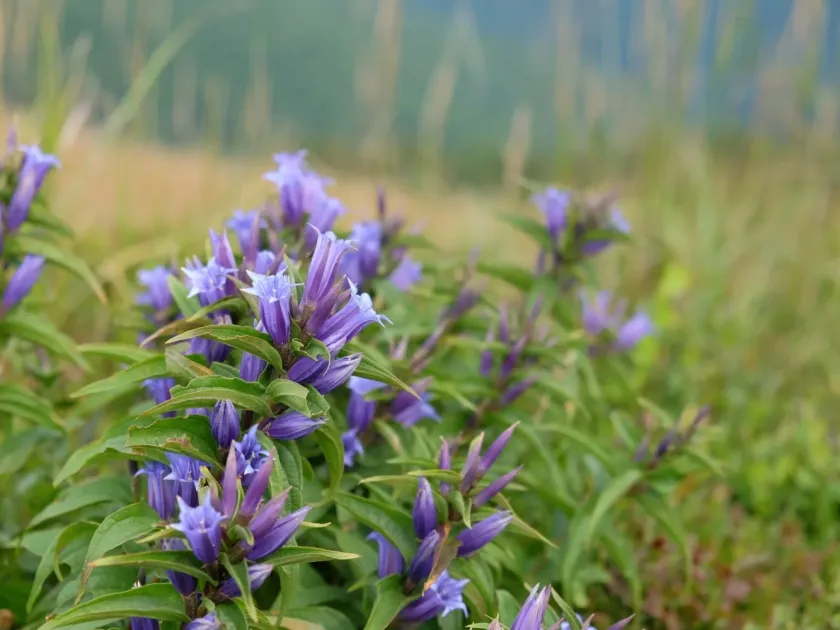
Description
Sowing dates
The seeds of Gentiana yunnanensis exhibit a strong dormancy, requiring mandatory stratification for successful germination in agricultural environments. Sowing should be carried out before winter in open soil or in trays, which must be kept at low positive temperatures for two months.
The optimal time for sowing in temperate climates is October or November. If spring sowing is planned, seeds must undergo artificial stratification in a refrigerator to simulate the natural climatic conditions of the high-altitude regions of Yunnan.
Seeds should be sown on the surface because they are photosensitive and require light to initiate the germination process. After sowing, the soil should be lightly pressed to ensure contact, avoiding deep burial.
Seedlings emerge slowly and require constant surface moisture to thrive. Pricking out or transplanting seedlings to their permanent location should only be performed after the second pair of true leaves has formed.
A planting density of approximately 15–20 plants per square meter is recommended to ensure adequate air circulation and prevent the development of fungal pathogens in the root zone.
Growing requirements
Gentiana yunnanensis is a perennial herbaceous plant belonging to the Gentianaceae family, native to the high-altitude regions of Yunnan, China. In its natural habitat, it grows in open meadows and slopes, which dictates its high light requirements.
The crop prefers moderately moist, well-drained soils with a neutral or slightly acidic reaction. A critical condition for successful cultivation is the presence of a gravelly or sandy layer to ensure the drainage of excess water.
The plant possesses exceptional winter hardiness characteristic of high-altitude flora. It is capable of withstanding prolonged periods of low temperatures but is sensitive to waterlogging combined with winter thaws.
During the growth process, Gentiana yunnanensis has specific watering requirements. The water should not contain excess lime, so rainwater or pre-treated water is preferred for irrigation.
To promote vigorous growth and produce high-quality raw material, the crop requires regular application of balanced mineral fertilizers, although salt concentrations in the soil must be kept to a minimum to avoid burning the root system.
Yield
The commercial use of Gentiana yunnanensis focuses on harvesting the roots, which contain specific biologically active compounds. The primary harvest of marketable product is typically achieved during the third or fourth year of growth.
Yields of raw root mass depend directly on light exposure and substrate fertility. In professional farming conditions with proper agronomic management, growers can produce up to 300-500 grams of dried raw material per square meter.
Biologically active components, including gentiopicrin, accumulate at their highest concentration before the onset of the dormant period, making the timing of the harvest crucial for the pharmacological value of the product.
Product yield also depends on the intensity of photosynthesis during the summer, necessitating careful weed control throughout the plant's development cycle.
The economic viability of growing Gentiana is high due to the plant's sustained demand in both traditional and modern medicine as a bitter agent that aids digestion.
Main diseases and pests
The main threat to the crop in poorly ventilated conditions is fungal infection, such as powdery mildew and various types of root rot. Water stagnation around the root collar almost invariably leads to plant death.
Pests such as slugs and snails pose a serious danger to young seedlings during the spring. Feeding on tender leaves leads to plant weakness and subsequent secondary infections.
Aphids may infest flower buds, extracting sap and inhibiting the development of flower stalks, which reduces both the ornamental value and the physiological performance of the plant.
Preventive measures are recommended to manage pathogens: strictly following planting patterns, ensuring effective drainage, and removing affected plant debris at the end of the season.
The use of chemical protection should be strictly regulated, as Gentiana yunnanensis is a medicinal crop that may accumulate pesticide residues.
Harvesting
Harvesting is performed in autumn when the aerial part of the plant begins to turn yellow and die back. During this time, nutrients are translocated into the root, ensuring the highest concentration of active compounds.
The roots are carefully dug up to avoid damaging the main root system. Once harvested, they are thoroughly washed to remove soil particles using running water.
Drying of the raw material is carried out in special dryers at temperatures not exceeding 45–50 degrees Celsius to preserve the chemical composition. Rapid drying prevents enzymatic processes that can degrade glycosides.
After drying, the roots are sorted into fractions, and any damaged or decayed specimens that do not meet pharmacopoeial quality standards are discarded.
Storage of the finished product requires airtight containers in a cool, dark, and dry place to prevent loss of biological activity due to moisture and light exposure.