
Gentiana utriculosa
Gentiana utriculosa
Description
Growing requirements
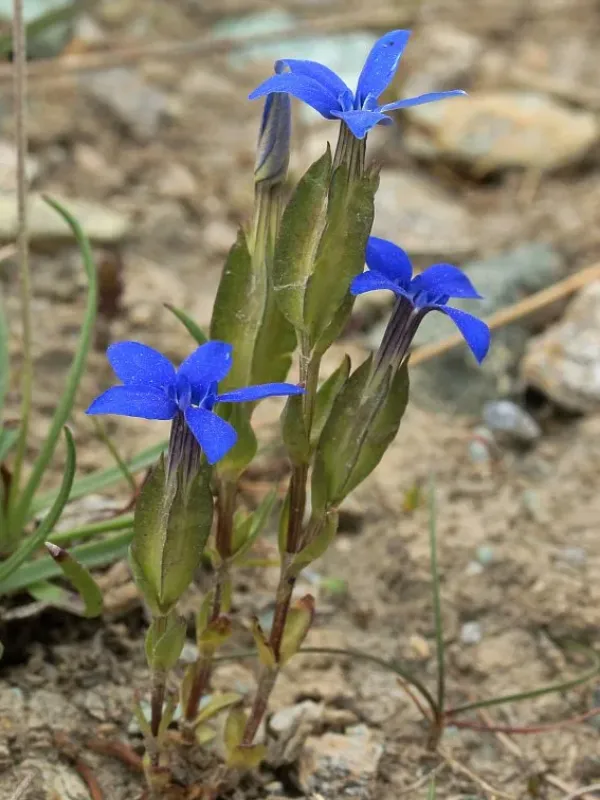
Gentiana utriculosa, commonly known as the bladder gentian, is a distinct annual herbaceous species within the Gentianaceae family. Unlike many other members of the genus that are perennial, this plant completes its life cycle in a single year, focusing energy on seed production.
The native range of this species is primarily concentrated in the mountain ranges of Central and Southern Europe. It thrives in specific niches, such as damp alpine meadows and slopes where limestone-rich soils are prevalent, ensuring the necessary mineral balance for development.
Botanically, the plant is characterized by its bright, azure-blue, funnel-shaped flowers that bloom at the apex of its stems. The foliage consists of a basal rosette of leaves, which are crucial for early-stage photosynthesis before the floral stems emerge and reach their full height.
Cultivation of this species requires precise environmental conditions. It demands high light intensity, constant substrate moisture, and a well-drained, lime-rich soil structure. It does not tolerate heavy, clay-bound soils or long periods of drought, which are typically fatal to its root system.
While not a major commercial agricultural crop, it is of high ecological importance. It serves as an indicator species for the health of alpine meadow ecosystems and is occasionally cultivated by botanic gardens and specialized nurseries focused on high-altitude flora.
Main diseases and pests
The primary threats to Gentiana utriculosa involve habitat loss due to agricultural intensification. The drainage of wet meadows and the introduction of artificial fertilizers disrupt the delicate chemical balance the plant requires, often leading to its local extinction.
In terms of pests, slugs and snails are the most significant threats, particularly during the rosette growth phase. They can consume the succulent leaves, preventing the plant from reaching the flowering stage.
Fungal pathogens pose a risk during periods of stagnant humidity. If the soil remains waterlogged without proper aeration, the plant becomes highly susceptible to root and stem rot, which can wipe out entire populations in a meadow.
Competition from taller grasses and invasive weeds is another major limiting factor. Because the bladder gentian is relatively small and slow-growing, it is easily outcompeted if the vegetation cover is not managed through traditional, low-intensity grazing or mowing.
Conservation and successful management require the preservation of traditional pastoral practices. Avoiding nitrogen-rich chemical inputs and ensuring that grazing does not cause excessive soil compaction are the most effective ways to protect this species in its natural environment.