
Triglav gentian
Gentiana terglouensis
Description
Growing requirements
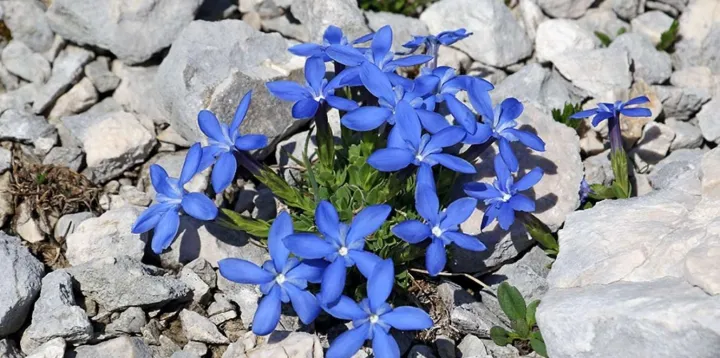
The Triglav gentian (Gentiana terglouensis) is a small perennial herbaceous plant belonging to the Gentianaceae family. It is endemic to the high-altitude limestone regions of the Eastern Alps, where it thrives in rocky crevices and scree slopes.
Botanically, it is a highly specialized plant adapted to extreme alpine conditions. It exhibits a slow growth rate and forms dense, prostrate mats with narrow leaves, which helps it survive intense mountain winds and low temperatures.
For successful cultivation, the Triglav gentian requires a substrate that mimics its natural limestone habitat. A well-drained, porous mixture of grit, gravel, and minimal organic matter is essential to ensure root health.
The climate requirements for this species include cool temperatures, particularly during the growing season, and protection from excessive heat. It is vital to provide good airflow and bright, though not scorching, light conditions.
Its primary use is in ornamental rock gardening. Due to its specific requirements, it is considered a collector's plant, often featured in specialized alpine collections or troughs where environmental conditions can be precisely managed.
Main diseases and pests
The most significant threats to Gentiana terglouensis in a garden setting involve pathogens related to moisture imbalance and poor drainage, which can rapidly lead to plant decay.
Root rot is the most common condition that compromises the plant, usually triggered by waterlogging during warmer months. Prevention relies on ensuring that no moisture accumulates around the crown of the plant.
Gastropod pests, such as slugs and snails, pose a major threat, particularly to new growth and tender blooms. These pests can cause significant damage in a short period if left unchecked.
Fungal issues, including various forms of damping-off, can occur if the humidity remains too high around the foliage, necessitating excellent ventilation in the planting area.
To mitigate these threats, gardeners should monitor the plants regularly, maintain a clean growing environment free of decomposing organic debris, and provide preventative treatments if necessary.