
Gentiana lawrencei
Gentiana lawrencei
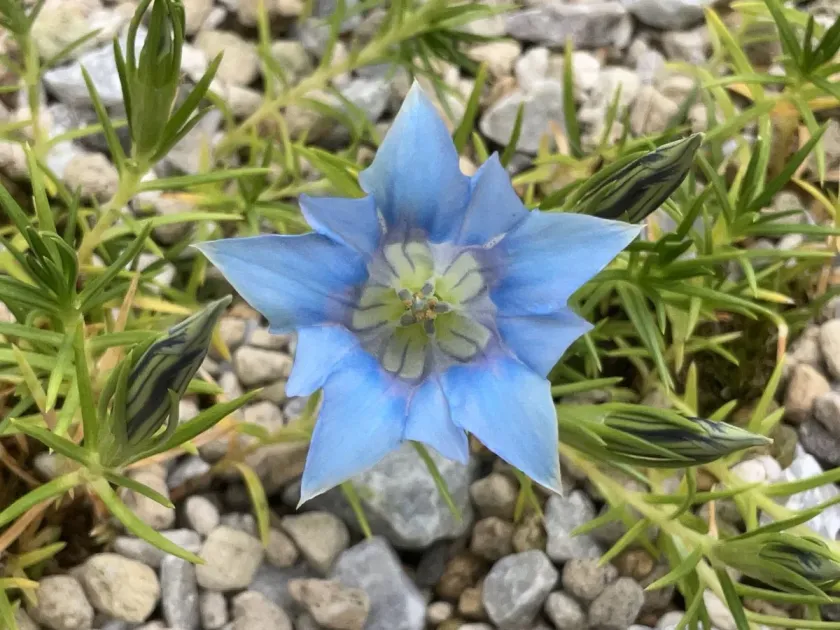
Description
Sowing dates
Sowing seeds of Gentiana lawrencei is typically performed in late winter or early spring. The seeds require mandatory stratification at low positive temperatures for 4 to 8 weeks to ensure successful germination.
Use a light, well-draining substrate for sowing, consisting of a mix of peat, sand, and fine grit. Sow the seeds on the surface, as they require light exposure to trigger growth processes.
Germination can be uneven, so it is essential to maintain stable surface moisture without allowing the soil to dry out completely. Covering the seed trays with glass or plastic film is recommended until the first true leaves emerge.
Prick out the seedlings once they develop two or three pairs of true leaves. The plant is sensitive to root disturbance, so transplanting should be done using the careful "gentle transfer" method into individual pots.
Move the young plants to their permanent location in the open ground only after the risk of late frosts has passed, ensuring sufficient spacing between plants for proper air circulation.
Growing requirements
Gentiana lawrencei is a perennial herbaceous plant belonging to the Gentianaceae family, originating from the alpine regions of East Asia. It prefers open, sunny locations, although in regions with hot climates, light shade during peak hours is beneficial.
The culture has strict soil requirements: the substrate must be neutral or slightly acidic, loose, and moisture-permeable. Waterlogging is fatal to the plant's root system.
A moderately cool climate with significant day-night temperature variations is necessary for the plant's successful development. It is perfectly suited for rock gardens where high-quality drainage is provided.
The plant does not tolerate overheating of the root zone, so mulching the soil surface around the plant with fine gravel or stone chips is recommended. This helps keep the roots cool and prevents foliage from touching damp soil.
Watering should be regular but moderate, especially during the active growth and flowering season. During the dormant period, reduce watering to a minimum, keeping the substrate just slightly damp.
Main diseases and pests
Gentiana lawrencei is generally resistant, but if cultivation practices are ignored, it may suffer from fungal diseases such as gray mold. This occurs primarily due to excessive moisture and lack of airflow.
Slugs and snails pose the greatest danger to the plant, feeding on tender leaves and floral buds early in the season. Installing traps or using protective barriers is highly recommended.
Aphids may infest the flower buds during hot, dry weather, sucking the sap and reducing the plant's ornamental value. Use appropriate insecticides or soap-based sprays if an infestation occurs.
Waterlogged soil can lead to the development of root rots, which are difficult to treat. Prevention is key, involving strict adherence to watering regimes and the use of high-quality drainage layers.
- Ensure adequate air circulation around the plants.
- Regularly inspect the undersides of leaves for pests.
- Remove weeds that compete for nutrients and water.
Harvesting
In ornamental gardening, harvesting in the traditional sense is not practiced. Economic use is limited to collecting seeds, which ripen in small capsules after flowering finishes.
Harvest the seed capsules when they begin to turn yellow, but before they open naturally. Afterward, dry them in a well-ventilated area and extract the seeds for future planting.
Cut flowers of Gentiana lawrencei can be used for small arrangements, although their vase life is relatively short. For maximum decorative effect, it is better to leave them on the plant.
In autumn, the plant's aerial parts naturally die back. It is crucial not to prune prematurely during this time, allowing nutrients to transition into the rootstock for successful overwintering.
Remove old stems in early spring before active growth begins to clear space for new shoots and to prevent the development of fungal infections in decaying plant matter.