
Hybrid gentian
Gentiana hybrids
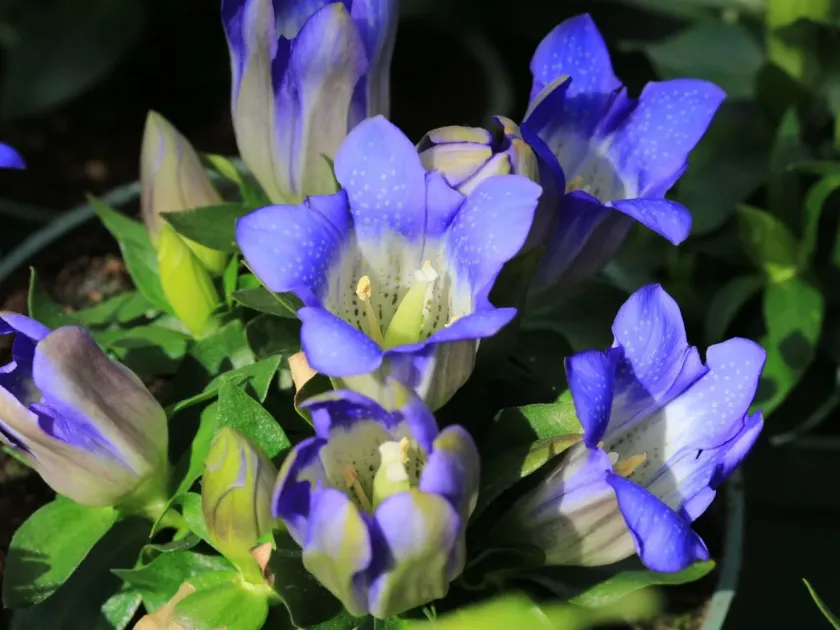
Description
Sowing dates
Sowing hybrid gentian seeds requires a cold stratification process to overcome dormancy and ensure successful germination. Seeds should be sown in late autumn or winter to simulate natural environmental cycles.
The seeds are tiny and should be surface-sown onto a moist, well-draining seed-starting mix. Light is essential for germination, so seeds should not be buried under a thick layer of substrate.
Germination can be slow and irregular, often taking several weeks to months. Maintaining consistent moisture in the seed trays while ensuring good ventilation is key to preventing damping-off.
Transplanting seedlings to individual pots should be done carefully once they develop true leaves. Allow the young plants to establish a strong root system before moving them to their permanent location.
For established hybrid clumps, division in early spring is the preferred method of propagation. This ensures that the new plants retain the specific characteristics of the hybrid parent.
Growing requirements
Hybrid gentians belong to the Gentianaceae family and thrive in cool, temperate climates. They require a location with partial shade to protect them from the harsh intensity of midday summer sun.
The soil should be rich in organic matter, slightly acidic to neutral, and possess excellent drainage properties. Constant moisture is required, but waterlogging must be avoided at all costs.
Regular watering is critical during the growing season, particularly during flowering periods. Mulching with grit or gravel helps maintain soil moisture while keeping the plant crown dry and rot-free.
These plants appreciate a humid atmosphere and are best placed in rock gardens or alpine borders where environmental conditions are stable. Good air circulation is essential to prevent fungal outbreaks.
Hardiness varies, but most hybrids benefit from a protective layer of mulch or brushwood during harsh winters. In regions with freezing-thawing cycles, protection is vital for root health.
Main diseases and pests
Fungal diseases like gray mold (Botrytis) represent the most significant threat, especially during wet and cloudy weather. Affected parts should be removed immediately to prevent further spread.
Slugs and snails are major pests that can devour young foliage overnight. Using physical barriers like crushed eggshells or copper tape around plants can help reduce damage from these mollusks.
Aphids and thrips can infest the flower buds, causing distorted growth and stunted blooms. Integrated pest management, including the use of mild insecticidal soaps, is often recommended.
Root rot is typically caused by poor soil drainage or excessive irrigation. Once the root system is compromised, recovery is difficult, making prevention through soil structure control paramount.
Viral infections can occasionally occur, manifesting as leaf mottling or yellowing. Since there is no cure for plant viruses, affected specimens should be removed and destroyed to protect nearby plants.