
Mountain bog gentian
Gentiana calycosa
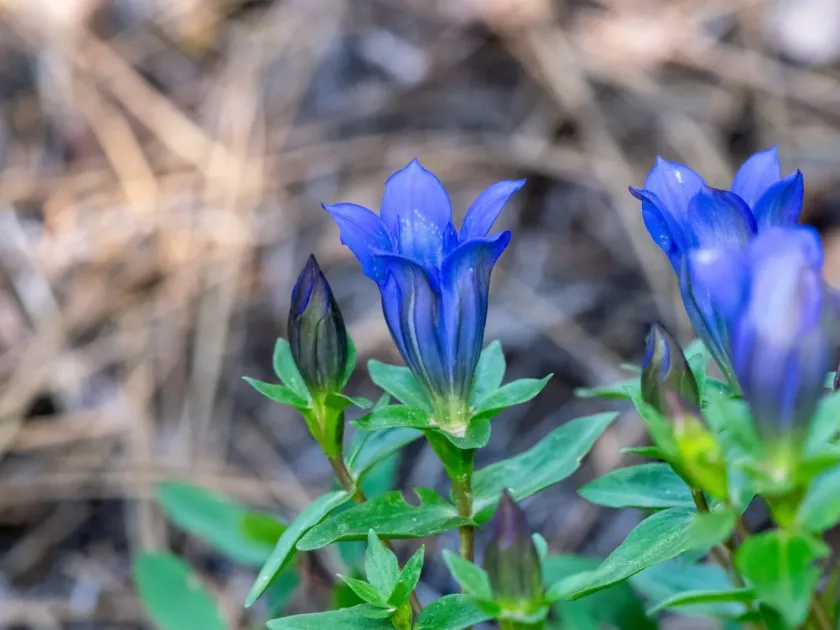
Description
Sowing dates
Sowing seeds of Gentiana calycosa is best performed in late autumn or early spring after a necessary stratification period. The seeds are minuscule and should be sown on the surface of a light, well-draining substrate without burying them.
Natural mountain conditions require the seeds to experience cold cycles for 4 to 8 weeks to trigger germination. In cultivation, keeping containers in cold frames or outdoor areas during late winter is essential for success.
Maintaining consistent moisture is critical during the germination stage. If the substrate dries out completely, the chances of successful development decrease significantly for this slow-growing species.
Once seedlings have produced two sets of true leaves, they should be pricked out into individual small pots. The plants have a delicate root system, so handling must be done with extreme care to avoid shock.
Flowering usually does not occur until the plant reaches maturity, which often takes two or three growing seasons when started from seed. Patience and consistent care are key to establishing a healthy plant.
Growing requirements
Gentiana calycosa, belonging to the Gentianaceae family, is a perennial herb native to the subalpine and alpine regions of western North America. It is prized for its intense blue, cup-shaped flowers.
The plant thrives in cool, moist environments and requires partial shade to protect it from the intensity of midday sun. In garden settings, it is best suited for rock gardens or north-facing slopes where temperatures remain moderate.
Soil requirements include acidic to neutral, humus-rich, and highly porous media. Excellent drainage is non-negotiable, as water stagnation will inevitably lead to root rot in this mountain species.
Regular watering is necessary throughout the growing season, particularly during drier summer stretches. Gravel mulching around the crown helps keep the roots cool and prevents foliage from sitting in overly wet conditions.
This species is well-adapted to high-elevation temperatures and struggles in regions with hot, humid summers. Providing a cooler microclimate is essential for long-term survival in lower-altitude gardens.
Main diseases and pests
Slugs and snails are the most frequent pests, often decimating tender foliage and flower buds overnight. Gardeners should implement barrier methods or organic bait to protect the plants during damp weather.
Root rot is the most serious disease risk, typically caused by poor soil structure or lack of drainage. Ensuring that the soil does not stay waterlogged is the primary preventative measure.
Aphids can occasionally cluster on developing flower buds, draining energy and distorting the plant's growth. Mild insecticidal soap applications are usually sufficient to manage these populations without damaging the plant.
Fungal leaf spots can appear if air circulation is poor, particularly in crowded planting scenarios. Proper spacing and ensuring that foliage can dry out after rain are effective preventive strategies.
Winter desiccation or freezing of saturated soil can cause damage during the transition period. Providing a loose protective layer can help stabilize the crown through fluctuating spring weather.