
Gazania rigida
Gazania rigida
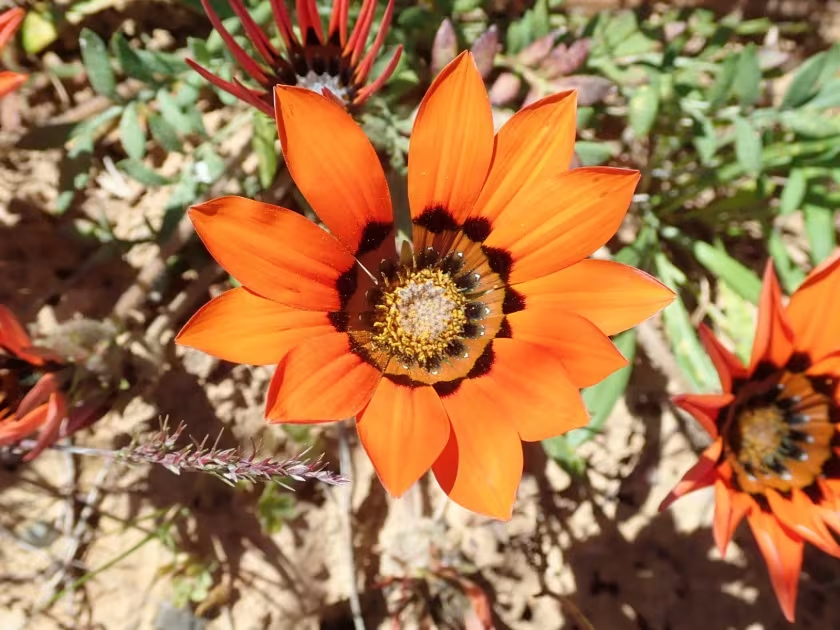
Description
Sowing dates
Sowing Gazania rigida for transplanting is best initiated in late winter or early spring in a climate-controlled environment. The seeds require warmth and consistent moisture to germinate, typically emerging within two to three weeks under optimal conditions.
Use high-quality, sterile seed-starting mix to prevent damping-off diseases during the early stages of development. Containers should provide sufficient space for root expansion, as transplant shock can significantly hinder subsequent plant vigor.
Direct seeding in the garden should only occur after all risks of frost have passed and soil temperatures have reached at least 15 degrees Celsius. Seeds should be sown shallowly, as they need a degree of light to trigger the germination process successfully.
Thinning is an essential practice when sowing directly into the ground to ensure each plant receives adequate airflow and sunlight. A spacing of 20–30 centimeters is generally sufficient to maintain healthy development and bloom production.
Acclimatization, or hardening off, is critical for greenhouse-grown seedlings. Gradually exposing the young plants to outdoor conditions over a ten-day period ensures they build the necessary cuticular wax to withstand direct sun and wind.
Growing requirements
Gazania rigida belongs to the Asteraceae family and is highly adapted to sunny, arid environments. It requires full sun exposure for at least six to eight hours a day; without adequate sunlight, the flowers will remain closed and the plants will struggle to thrive.
Soil requirements for this species are centered on excellent drainage. Sandy or stony soils are ideal, as they mimic the natural habitat of the plant and prevent moisture from lingering near the root collar, which is susceptible to decay.
As a xerophytic species, Gazania rigida is incredibly drought-tolerant once established. Overwatering is the most common cause of failure in cultivation, so irrigation should be sparse and provided only during prolonged dry spells.
Fertilization should be handled with caution, as high-nutrient soils often result in leggy plants. A light application of balanced fertilizer early in the season is sufficient to support the flowering cycle without encouraging excessive vegetative growth.
The optimal growth temperature ranges from 20 to 25 degrees Celsius. While it can handle minor temperature fluctuations, it is sensitive to severe frost and is typically treated as an annual in cooler temperate regions.
Main diseases and pests
Gray mold, caused by Botrytis species, is the primary threat to Gazania rigida during periods of high humidity or poor air circulation. Removing dead foliage and ensuring adequate spacing are the most effective preventative measures.
Spider mites are a common pest, particularly in hot and dry climates. These mites extract sap from the leaves, causing stippling and eventual leaf drop; regular inspection of the underside of leaves is recommended for early detection.
Powdery mildew may manifest as a white, dusty layer on the foliage if the plants are subjected to stagnant air or dramatic fluctuations in moisture levels. Fungicidal applications are necessary if preventative cultural practices fail to control the spread.
Aphids can also colonize the succulent stems and flower buds, weakening the plant and potentially transmitting viral pathogens. Insecticidal soaps are usually sufficient for minor infestations if applied thoroughly.
Root rot is a physiological threat often linked to poor soil structure. If the substrate does not drain rapidly, the plant's roots will suffocate, leading to sudden wilting and death, which is irreversible once the disease has progressed.