
Gazania ciliaris
Gazania ciliaris
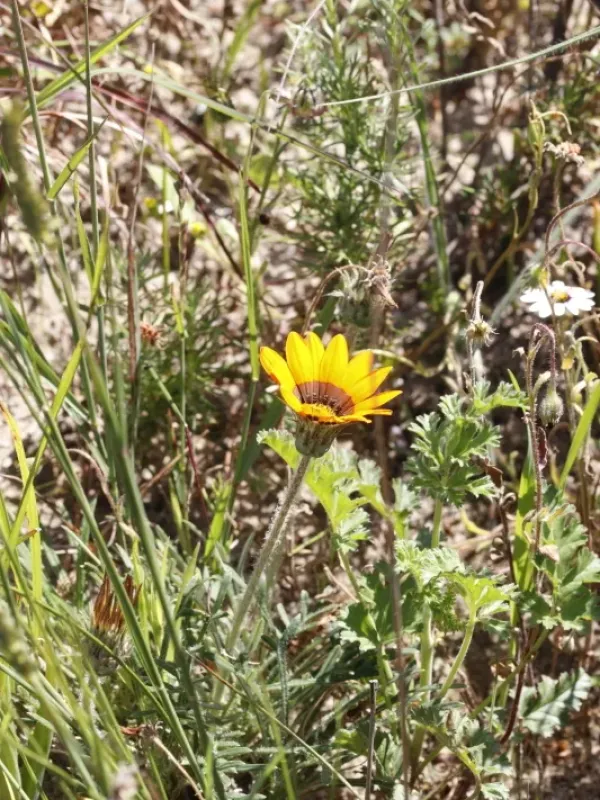
Description
Sowing dates
Gazania ciliaris, a member of the Asteraceae family, requires careful seed management to ensure vigorous growth. Seeds should be sown in trays during late winter or early spring to allow for adequate establishment before the growing season starts.
The germination process is temperature-dependent and requires a consistent range of 20–22 degrees Celsius. Maintaining high light levels immediately after emergence is critical to prevent seedling etiolation and ensure a sturdy stem structure.
Transplanting into the garden should only occur once the risk of frost has completely passed. Acclimatizing seedlings to outdoor conditions through a gradual hardening-off process is essential for success.
Optimal spacing between plants is approximately 20–25 centimeters, which allows for proper airflow and root system expansion. Planting too densely can promote humidity-related diseases which this species is susceptible to.
Direct seeding in the field is only recommended in frost-free regions. For the best performance, starting seeds in a controlled environment remains the standard practice for agricultural and ornamental growers.
Growing requirements
As a native to the arid landscapes of Southern Africa, Gazania ciliaris is highly adapted to intense sun exposure. It requires full sunlight throughout the day to trigger the blooming mechanism and maintain health.
Soil composition is a vital factor in cultivation. The plant thrives in well-drained, sandy soils that prevent water accumulation around the roots, as moisture-saturated soil leads to rapid rot.
Drought tolerance is one of the plant's primary features, but it requires supplemental irrigation during extreme dry spells to keep flowering consistent. Water should be applied at the base of the plant to avoid wetting the foliage.
Thermal requirements for this species include stable warm temperatures. It does not tolerate cold, soggy winters, and therefore it is managed as an annual in most temperate climates across the globe.
Nutrient management focuses on balanced fertilizers with an emphasis on potassium. Avoiding excessive nitrogen is crucial, as it promotes leafy growth rather than the desired floral display typical of this species.
Main diseases and pests
The most significant threats to Gazania ciliaris are fungal pathogens, specifically those related to high humidity. Gray mold can develop quickly if the air circulation around the canopy is inadequate.
Pests such as aphids and spider mites are common in dry, warm conditions. These can be managed through regular monitoring and the use of appropriate systemic insecticides if an infestation is detected.
Root rot remains the most common physiological threat. It is typically caused by poor drainage or over-irrigation, making preventative measures like soil amendment and careful watering schedules essential.
Early identification of pest populations is key to preventing widespread damage. If damage occurs, removing the affected leaves or treating with insecticidal soap can mitigate the loss of decorative quality.
- Gray mold under high humidity
- Aphid colonization on flower buds
- Root decay due to poor drainage
- Powdery mildew in overcrowded patches