
Gaultheria mucronata
Gaultheria mucronata (L. f.) Hook. & Arn.
Description
Growing requirements
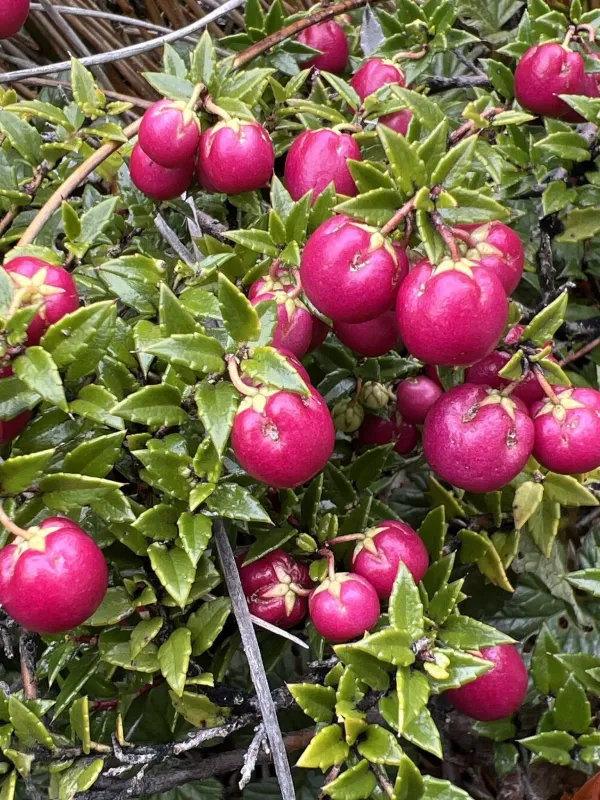
Gaultheria mucronata, commonly known as prickly heath or Chilean wintergreen, is an evergreen shrub belonging to the Ericaceae family. It is native to the southern regions of South America, specifically in areas of Chile and Argentina with cool, temperate climates.
The plant is highly valued for its dense, dark green foliage and long-lasting, berry-like fruits that provide significant visual interest in autumn and winter. It is often grown in rock gardens, heath gardens, or containers in temperate climates.
The cultural requirements for this plant focus on acidic, humus-rich soil with excellent drainage. Like many Ericaceous plants, it thrives in environments that mimic forest undergrowth, where organic matter is abundant and moisture levels are consistent.
It prefers a location with partial shade, as direct exposure to harsh afternoon sun can lead to leaf scorching. Protection from cold, drying winds is also essential to maintain the health and appearance of the evergreen leaves throughout the winter season.
Cultural management involves keeping the root zone consistently moist but never waterlogged. Mulching with pine needles or peat is highly recommended, as it helps regulate soil temperature, preserve moisture, and maintain the necessary acidic pH levels.
Main diseases and pests
Phytophthora root rot is the most significant threat to the plant, usually triggered by poor soil drainage and waterlogging. Once infected, the plant is difficult to save, making proper site preparation and drainage essential.
Spider mites are common pests that may infest the plant during hot and dry spells. These pests suck the sap from the leaves, causing them to turn yellow or speckled, which requires timely application of specialized treatments.
Iron chlorosis is a common issue when the soil pH rises above the optimal level. This condition is easily identified by the yellowing of the foliage while the veins remain green, requiring the addition of iron chelates to the soil.
Winter damage is a potential risk, especially in colder hardiness zones where sudden drops in temperature can injure the foliage. Applying a protective layer of mulch around the base of the plant can provide extra security for the root system.
Regular sanitation of the plant is vital for preventing disease outbreaks. Removing dead or damaged branches improves airflow through the center of the shrub, reducing the potential for fungal diseases and pest colonization.