
Forsythia hybrids
Forsythia hybrids
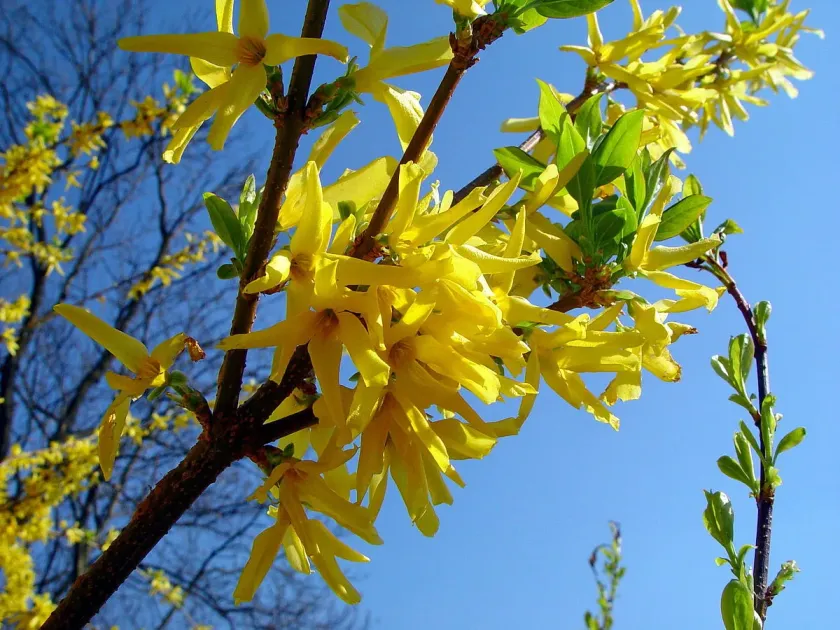
Description
Growing requirements
Forsythia hybrids (Forsythia × intermedia) belong to the Oleaceae family and represent a popular group of deciduous shrubs known for their spectacular early spring flowering. These hybrids are the result of cross-breeding specific species to enhance cold hardiness and floral density.
The plant thrives in full sun, which is essential for maximizing flower bud production. While it can tolerate partial shade, the flowering display is significantly reduced, and the shrub may become sparse and leggy over time.
Soil requirements for these hybrids are moderate. They prefer well-draining, fertile soils that are slightly acidic to neutral. They perform poorly in heavy, clay-heavy, or waterlogged conditions, which can cause root decay and plant decline.
Cultural practices include consistent watering during the establishment phase and periods of extreme drought. Mulching around the base helps retain moisture and suppress weeds, while protecting roots from extreme temperature fluctuations.
Pruning is the most vital maintenance activity for Forsythia. It must be performed immediately after the flowering period ends, as flower buds develop on the previous year's growth. Removing older wood ensures that fresh, vigorous shoots have room to develop for the following season.
Main diseases and pests
The most common disease affecting Forsythia hybrids is fungal twig blight. It appears as sudden wilting and browning of branches, which often requires surgical removal of the affected area to save the shrub.
Bacterial blight is another concern, often exacerbated by cool, wet springs. It causes dark, water-soaked spots on foliage and stems, and there is no direct chemical cure, making sanitation the best line of defense.
Nematodes are soil-borne pests that can significantly damage the root system, leading to stunted growth and yellowing of foliage. Healthy soil management is critical for preventing infestation.
Aphids can frequently infest the tender growth during the spring. Although rarely lethal, they can vector viruses and cause leaf curling, which may impact the plant's overall aesthetic quality.
Integrated pest management, including pruning for airflow and removing infected debris, is highly recommended to keep Forsythia hybrids healthy and vibrant throughout their growing season.