
Girald's forsythia
Forsythia giraldiana
Description
Growing requirements
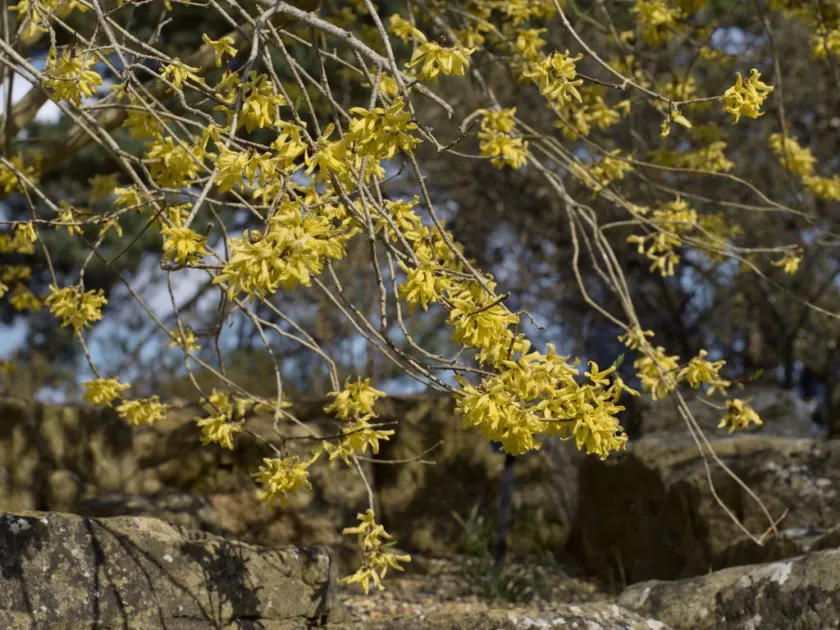
Girald's forsythia (Forsythia giraldiana) is a deciduous shrub belonging to the Oleaceae family. It is native to northwest China, where it typically thrives in wooded areas and rocky slopes within temperate regions.
To ensure optimal growth, this plant requires a sunny location with well-drained, fertile soil. While it is adaptable to various soil types, a neutral to slightly alkaline pH is preferred for the healthiest foliage and the most abundant blooms.
The species is known for its hardiness in cooler climates. However, it requires protection from severe drying winds in winter. Consistent moisture is essential during the growing season, though it should not be left in standing water.
Regular maintenance involves pruning immediately after the flowering period ends. This prevents the shrub from becoming overgrown and encourages the development of fresh wood, which is crucial for next season's buds.
Landscape designers often utilize this shrub for early spring color, planting it as a standalone feature, in mixed borders, or as part of a formal hedge. Its golden blooms provide a spectacular contrast to early greenery.
Main diseases and pests
Although generally robust, the plant can be susceptible to fungal infections such as leaf spots or bacterial blight if the environment is too damp. Proper ventilation within the shrub canopy is the best preventative measure.
Pests like aphids and spider mites may target young leaves and buds. Regular monitoring and the application of appropriate horticultural oils or insecticides are effective in managing pest populations.
Root rot remains a significant threat, usually caused by improper soil drainage or overwatering. Careful site selection, ensuring the soil is light and airy, is the primary defense against this condition.
Nematodes are another potential problem in sandy soil types. Incorporating organic matter during planting can help build soil health and discourage the presence of these harmful microorganisms.
Maintaining a balanced nutrient profile through seasonal feeding helps the plant resist disease and recover quickly from any incidental pest attacks during the active growing cycle.