
Fimbristylis squarrosa
Fimbristylis squarrosa
Description
Growing requirements
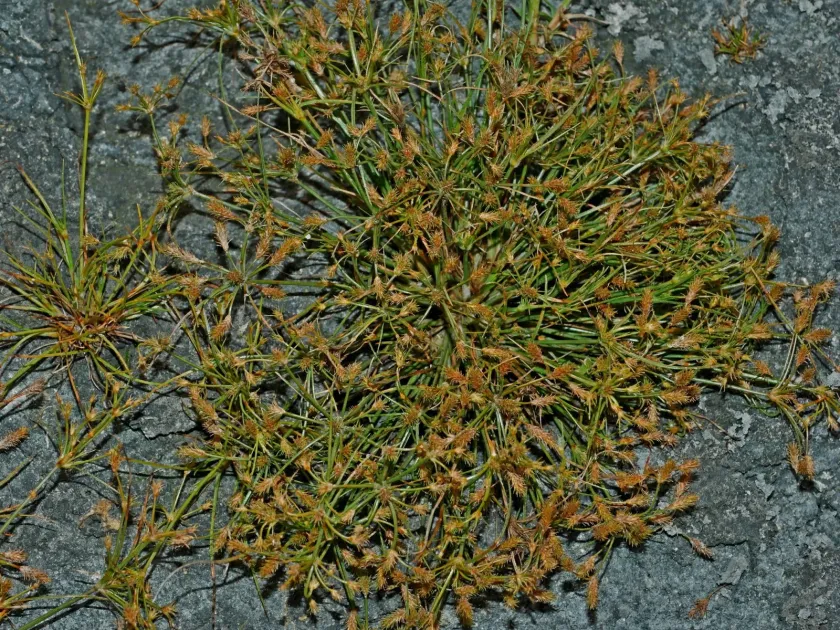
Fimbristylis squarrosa is an annual herbaceous plant belonging to the large Cyperaceae family, commonly known as the sedge family. It is characterized by its distinct, often squarrose (spreading or reflexed) spikelets, which differentiate it from other related sedges found in similar wetland environments.
The species displays a widespread distribution across tropical, subtropical, and temperate regions globally. It predominantly thrives in moist habitats such as shorelines, wet meadows, riverbanks, and in agricultural settings, particularly within paddy fields where moisture levels are consistently high throughout the growing season.
Regarding its ecological requirements, Fimbristylis squarrosa demands high light intensity and soils with high moisture content. It is well-adapted to anaerobic conditions typical of waterlogged soils, allowing it to establish itself in areas where competition from dry-land plant species is significantly restricted.
In agricultural practice, this plant is frequently identified as a weed in rice cultivation. Because of its rapid growth and effective seed dispersal, it can compete with crops for light and nutrients. Agronomic control typically involves managing water levels and utilizing precise herbicide applications within integrated weed management programs.
Beyond its status as a weed, the plant plays a functional role in local ecosystems by stabilizing soil and providing habitat in riparian zones. Understanding its life cycle and adaptive mechanisms is essential for land management, particularly in developing sustainable agricultural practices that minimize weed interference in crop production.