
Spathulate fimbristylis
Fimbristylis spathacea
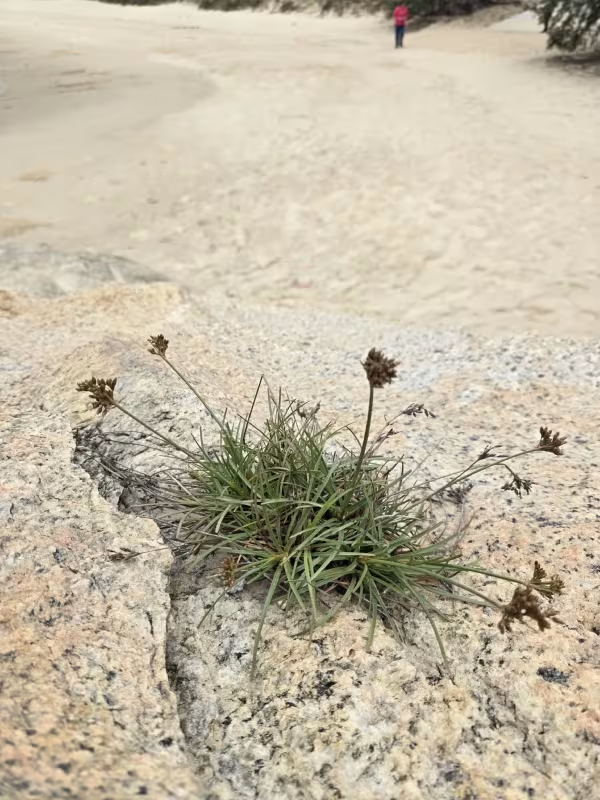
Description
Growing requirements
Spathulate fimbristylis (Fimbristylis spathacea) is a perennial herbaceous plant belonging to the Cyperaceae family. It is a highly specialized species adapted to harsh coastal and tropical environments.
The plant is native to tropical Asia, Australia, and the Pacific Islands. It thrives in open, sunny locations such as sandy dunes, coastal plains, and areas near saline water sources.
Cultivation requirements include well-drained, sandy soils that allow for rapid drainage. While it tolerates periodic inundation, it performs best in soils that do not remain waterlogged for extended periods.
The plant is known for its high salt tolerance, making it an excellent candidate for agricultural use on degraded or saline-affected marginal lands where traditional crops fail to thrive.
Botanically, it features a tufted growth habit with stiff, narrow leaves and upright culms. The inflorescence consists of small, characteristic spikelets that emerge from the center of the plant rosette.
Yield
The primary agricultural and environmental use of Fimbristylis spathacea is in phytoremediation and soil stabilization. Its extensive root system is highly effective at anchoring sandy soils and preventing erosion.
In certain traditional practices, the plant material has been harvested for basic utility purposes, including basketry or as a supplementary forage component in extensive grazing systems.
Its ability to establish on nutrient-poor, sandy soils makes it a valuable tool for ecological restoration. Large-scale plantings can successfully rehabilitate disturbed coastal sites.
Agricultural yields in terms of biomass are relatively low; however, the plant provides consistent soil cover throughout the year, which is crucial for protecting the underlying soil structure.
In landscaping, it is gaining interest as a low-maintenance, drought-tolerant ground cover that can withstand harsh maritime conditions better than most ornamental grasses.
Main diseases and pests
Fimbristylis spathacea possesses significant natural resistance to most common crop diseases. Its physiological adaptations make it resilient against typical fungal and bacterial pathogens found in tropical zones.
Pest pressure is generally low, as the stiff, fibrous tissue of the leaves is not highly attractive to generalist insects. No major agricultural pesticide usage is required for this species.
The greatest threat to the survival of this plant is competition for sunlight. As a low-growing species, it can be easily outcompeted and suppressed by taller, more aggressive herbaceous plants or shrubs.
Over-saturation of the substrate is a potential risk factor that may lead to root suffocation if drainage is poor. Ensuring a porous growth medium is the best preventative measure against root decay.
Monitoring for excessive weed development is recommended during the establishment phase. Once the plants reach maturity and form dense tufts, they usually suppress weeds successfully on their own.