
Fimbristylis quinquangularis
Fimbristylis quinquangularis
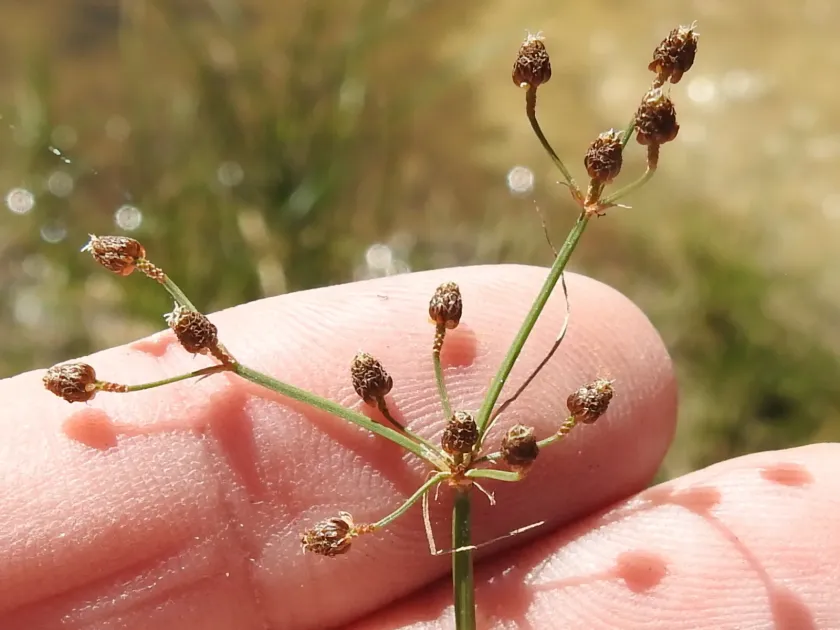
Description
Growing requirements
Fimbristylis quinquangularis is an annual herbaceous plant belonging to the Cyperaceae family. It is a moisture-loving species that thrives in aquatic or semi-aquatic habitats throughout its natural range in tropical and subtropical Asia.
The plant is commonly found in marshy areas, edges of rice paddies, and wetlands. Its adaptation to saturated soil conditions makes it a significant botanical component in ecosystems prone to seasonal flooding.
Its primary botanical feature is the characteristic pentagonal stem, which provides structural rigidity despite the soft, muddy substrates in which it typically grows. The leaves are basal, narrow, and grass-like in appearance.
For successful cultivation, the species requires high humidity, consistent water availability, and optimal thermal conditions typical of tropical environments. Soil must be nutrient-rich, preferably silty or clay-heavy, to support its fibrous root system.
Economically, this species serves as forage for livestock in wetland pastures and has potential applications in ecological water treatment due to its natural ability to filter nutrients from aquatic environments.
Main diseases and pests
The main threats to the health of the crop include root decay pathogens that proliferate in stagnant water conditions where oxygen levels are low and organic matter accumulation is high.
Insect pests, specifically leaf-feeding larvae and specialized aquatic beetles, are the primary biological threats that can defoliate plants during their rapid growth phase, leading to diminished biomass yield.
Fungal infections, particularly rusts and leaf spots, often manifest during humid, stagnant air periods, necessitating improved field sanitation and water movement management.
Weed control represents a significant agronomic challenge, as the species may struggle to establish itself against faster-growing competitors in the early developmental stages.
Integrated pest management strategies should emphasize water circulation to prevent pathogen buildup and regular monitoring for early signs of infestation along the field boundaries.