
Fimbristylis obtusifolia
Fimbristylis obtusifolia
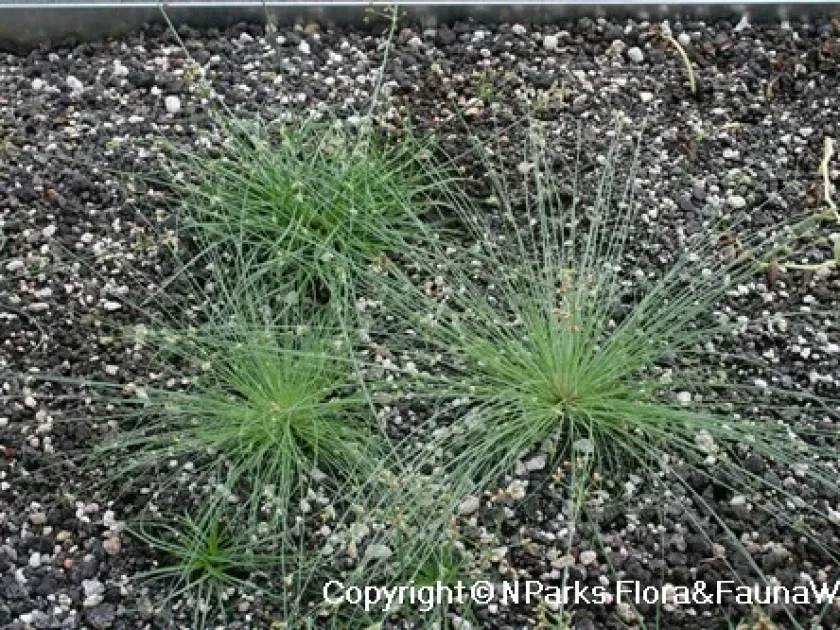
Description
Growing requirements
Fimbristylis obtusifolia is a perennial herbaceous plant belonging to the Cyperaceae family. It is a moisture-loving species that thrives in environments characterized by high soil saturation and specific coastal ecological niches.
The native distribution area of this crop includes various tropical and subtropical regions. It is typically found in saline or freshwater wetlands, demonstrating remarkable resilience to waterlogged soil conditions where many conventional crops cannot survive.
For optimal growth, the species requires intense solar radiation and high ambient temperatures, usually ranging from 22 to 30 degrees Celsius. It does not tolerate prolonged shading, which inhibits its photosynthetic capacity.
Soil preferences lean towards fine-grained substrates, such as silt or moist sand, which can retain nutrients despite high water movement. The plant exhibits high salinity tolerance, allowing it to occupy niches that are hostile to other vegetation.
The botanical structure, consisting of dense tufts of rigid leaves and thin, upright stalks, provides the plant with the physical stability needed to endure seasonal flooding and turbulent coastal water conditions.
Yield
The industrial and agricultural value of Fimbristylis obtusifolia is primarily centered on its utility as a source of fiber. The tough, flexible stems are harvested for the artisanal and small-scale manufacturing of mats, baskets, and cordage.
In certain pastoral systems, the crop acts as a secondary forage source. While not ideal for high-yield dairy production due to the hardness of the leaf blades, it provides vital biomass in wetlands where other grasses fail to grow.
Biological productivity is largely influenced by the hydroperiod—the length of time the soil remains saturated. Stable water levels facilitate consistent biomass accumulation, making it a reliable crop for local subsistence economies.
There is significant potential for utilizing this species in phytoremediation projects. Its root system is effective at stabilizing the soil, preventing shoreline erosion and filtering minerals from contaminated runoff water.
Harvesting techniques remain largely manual. The sustainability of the yield is preserved by traditional grazing and cutting patterns that prevent over-exploitation and allow the plant to regenerate through its underground rhizomes.