
Fimbristylis globulosa
Fimbristylis globulosa
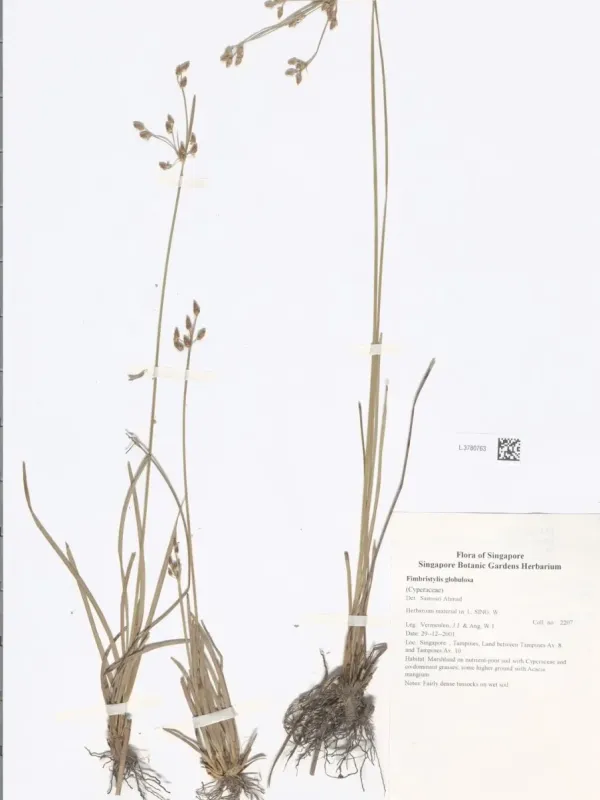
Description
Sowing dates
Fimbristylis globulosa is a perennial herbaceous plant belonging to the Cyperaceae family. It is widely cultivated in various parts of Southeast Asia, primarily as a specialized technical crop used for weaving mats and high-quality artisanal goods.
Cultivation typically begins by preparing wet fields or paddy-like plots. The planting process usually involves transplanting seedlings into water-saturated soils, which is essential for the rapid establishment of the plant's root system at the start of the rainy season.
The spacing between plants must be carefully managed to ensure each clump has enough room for vertical growth. Proper spacing facilitates airflow, which is critical for maintaining healthy stems and preventing fungal issues common in humid environments.
Soil preparation involves deep tilling and the incorporation of organic matter, such as compost or manure, to provide the necessary nutrients for vigorous stem elongation. A nutrient-rich environment is essential to achieve the desired height and stem thickness.
The timing of planting is crucial and is often aligned with the onset of the monsoon to minimize irrigation costs and provide the steady hydration that this semi-aquatic species requires to thrive during its initial growth stages.
Growing requirements
This species is highly demanding in terms of water and moisture levels. It thrives in soils that remain consistently waterlogged throughout the growing cycle, mimicking the marshy habitats where it occurs naturally in the wild.
Climate requirements include high temperatures, typically ranging from 25 to 30 degrees Celsius. The plant is sensitive to frost and cold winds, which can damage the tender, fiber-rich stems and negatively impact the quality of the raw material.
Sunlight is a key factor for development. Fimbristylis globulosa requires open areas with full sunlight exposure to maximize photosynthetic activity, which in turn leads to the production of strong, flexible, and durable fibers.
The soil should have a high water-retention capacity, with alluvial or heavy clay-loam soils being the most suitable. These soil types provide the stability needed for the plants to remain upright during heavy rains and wind.
Ongoing maintenance involves keeping the field free of invasive weeds during the first few weeks. Once the plant establishes a dense canopy, it becomes highly competitive and requires less manual intervention for weed suppression.
Main diseases and pests
The main threats to Fimbristylis globulosa include fungal infections such as stem rot and various blight-causing pathogens that thrive in stagnant water. Proper drainage management is the primary defense against these biological hazards.
Insect pests, particularly stem-boring larvae, pose a significant risk to crop quality. By burrowing into the stem, they create structural weaknesses that make the fiber unusable for high-end weaving applications, requiring careful field monitoring.
Chemical intervention is often discouraged due to the end-use of the product in home environments. Instead, integrated pest management (IPM) strategies, including crop rotation and the use of beneficial biological agents, are prioritized.
Environmental stress caused by sudden temperature drops or prolonged drought can weaken the plant's natural defense mechanisms, making it more susceptible to opportunistic diseases. Maintaining stable growing conditions is the best form of prophylaxis.
Field hygiene, including the removal of infected plant debris after harvest, plays a vital role in disease control. By reducing the reservoir of pathogens in the field, farmers can significantly improve the yield and quality of subsequent harvests.
Harvesting
The harvest occurs when the stems reach their maximum desired length and exhibit a specific texture, usually just before the plant enters its reproductive stage. Timing is critical to ensure the flexibility and strength required for weaving.
Harvesting is performed manually using sickles, with stems cut close to the soil surface to ensure long, uniform lengths. This manual approach is preferred as it allows for the selection of only the highest-quality stems while protecting the root clump.
Post-harvest processing involves sorting the stems by length and diameter. The material is then dried in shaded, well-ventilated areas to remove excess moisture without making the fibers brittle, which would occur if dried under direct, intense sunlight.
To improve flexibility for weaving, the stems may be subjected to controlled steaming. This process softens the outer layers of the fibers, making them easier to manipulate without breaking during the intricate basketry and mat-making processes.
Proper storage after drying is essential to prevent moisture absorption and mold growth. Storing the prepared fibers in a cool, dry place ensures that the raw material retains its structural integrity until it is used by artisans.