
Creeping red fescue
Festuca rubra L. var. littoralis Vasey
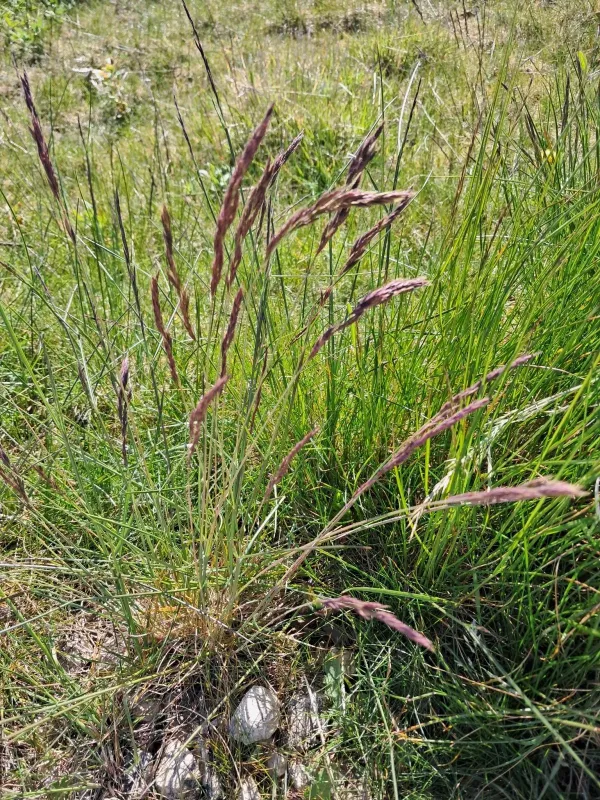
Description
Growing requirements
Creeping red fescue (Festuca rubra L. var. littoralis Vasey) is a perennial grass species belonging to the Poaceae family. This specific variety is highly valued for its exceptional adaptability to challenging environments, including coastal and saline habitats.
The plant possesses a robust and deep root system, which contributes to its high tolerance for drought and nutrient-poor soils. It thrives in well-drained sandy or loamy soils, making it an excellent choice for stabilizing sites that are otherwise difficult for more demanding species.
One of the most notable features of this variety is its salt tolerance, which makes it ideal for landscaping along coastal areas or roadside verges treated with winter de-icing salts. It demonstrates great resilience in both full sun and partial shade conditions.
This grass develops a dense, fine-textured turf that is highly resistant to heavy foot traffic once established. Although it exhibits a relatively slow establishment rate, its long-term performance makes it a staple component in high-quality turfgrass mixtures for parks and sports fields.
Beyond its aesthetic appeal in landscape architecture, creeping red fescue serves as a valuable forage crop. Its ability to maintain growth in various climatic conditions ensures reliable biomass production in agricultural systems facing water scarcity or soil limitations.
Main diseases and pests
As with many cool-season grasses, creeping red fescue can be susceptible to fungal diseases such as leaf spot, powdery mildew, and red thread. These diseases are particularly prevalent during periods of excessive moisture and poor air circulation within the canopy.
Common insect pests include white grubs and wireworms, which can severely damage the root system if populations reach high levels. Additionally, aphids may infest the grass blades during the spring growth phase, potentially weakening the overall stand.
Effective management begins with proper site drainage to prevent waterlogging, which is a major stressor for the plants. Promoting good air movement through regular mowing and maintenance significantly reduces the risk of fungal pathogen development.
Chemical control should be employed judiciously and only when necessary on seed production fields. For turf management, the focus should remain on integrated pest management practices, including balanced fertilization and core aeration to promote vigorous growth.
A healthy, well-nourished stand is the most effective defense against pests and diseases. By maintaining optimal soil fertility and avoiding excessive nitrogen applications that promote overly lush, vulnerable growth, landowners can ensure the long-term sustainability of their grass stands.