
Fargesia rufa
Fargesia rufa T. P. Yi
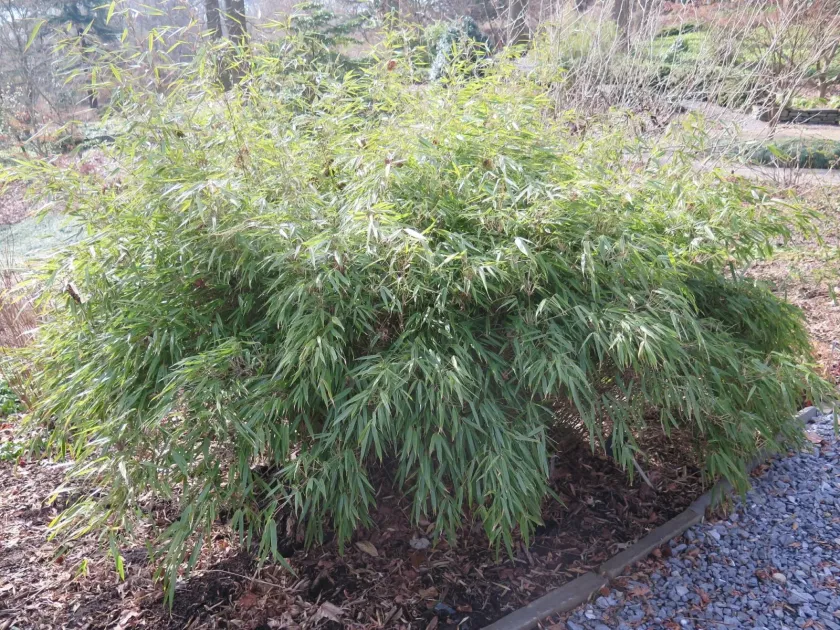
Description
Growing requirements
Fargesia rufa is an evergreen, clumping bamboo belonging to the Poaceae family. Unlike running bamboos, this species grows in tight, non-invasive clusters, making it highly desirable for landscaping and private gardens.
Originating from the mountain forests of Sichuan, China, this plant has adapted to cooler, moist environments. It is famously known in the wild as a staple food source for the giant panda.
The plant thrives in moist, well-draining, and nutrient-rich soil. It prefers a location with partial shade, avoiding the harsh intensity of direct midday sun, which can scorch its delicate leaves.
In terms of climate, Fargesia rufa is exceptionally cold-hardy for a bamboo species. It can withstand temperatures as low as -20°C, remaining green throughout the colder months.
Standard care involves regular watering during dry spells and applying organic mulch around the base. Mulching is crucial for maintaining soil moisture and protecting the shallow root system from extreme temperature fluctuations.
Main diseases and pests
Fargesia rufa is generally resistant to most pests and diseases, particularly when planted in its ideal environment. Most issues arise from improper soil management or lack of ventilation.
Root rot is the most common threat, usually caused by stagnant water in poorly drained soil. Ensuring a deep, permeable substrate is the primary preventive measure against fungal pathogens.
Spider mites may occasionally appear during hot, dry summer months. Regular overhead watering or misting can effectively deter these pests and maintain the plant's health.
Aphids might target new, tender shoots during the spring growing season. While they rarely cause permanent damage, localized application of horticultural oil can manage infestations if they become significant.
Maintaining strong plant vigor through appropriate fertilization and regular health checks ensures that the bamboo remains an attractive and durable feature in the landscape.