
Eustachys retusa
Eustachys retusa
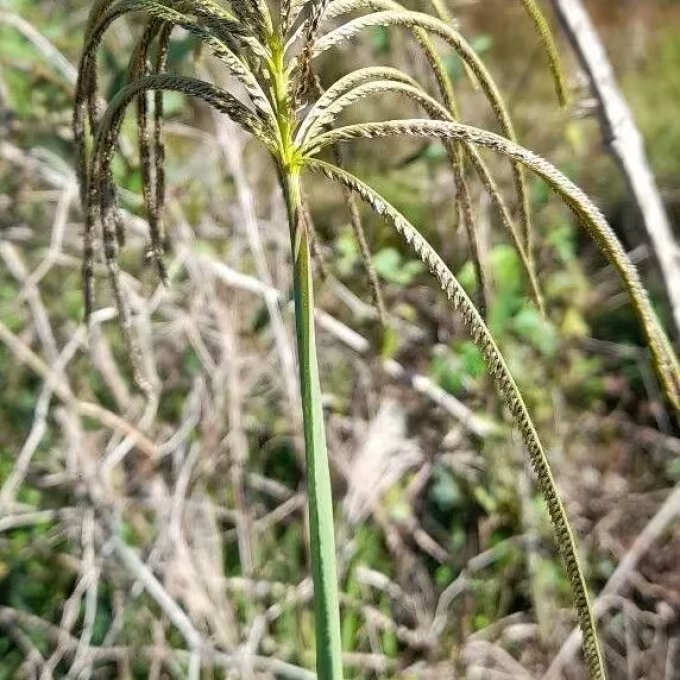
Description
Growing requirements
Eustachys retusa is a perennial grass species belonging to the Poaceae family, widely recognized for its high adaptability and soil-binding properties. It serves as an essential component in natural and semi-natural grassland ecosystems.
Originating primarily from South American regions, this species is well-adapted to subtropical and temperate climates. Its biological success is attributed to its high tolerance for poor, sandy, and saline soils, where other forage species might fail to establish a productive canopy.
Regarding climatic needs, Eustachys retusa thrives in sunny environments with moderate precipitation. It exhibits significant drought resistance, which makes it a valuable asset for maintaining ground cover in semi-arid agricultural zones and reducing soil erosion risks.
The agrotechnical management of this crop requires minimal intervention, focusing primarily on balanced grazing or cutting frequency to encourage regrowth. The plant responds well to natural fertilization and does not require complex tillage systems for maintenance.
Its primary agricultural utility is in livestock production. As a forage crop, it provides a stable source of nutrition for grazing animals throughout the growing season, contributing to the sustainability of pasture-based livestock systems.
Main diseases and pests
Common health issues for this species include fungal infections under stagnant water conditions. Proper site selection and drainage management are critical to prevent root system degradation and canopy thinning.
Pest threats include typical grass-feeding insects and aphids that may infest the foliage. Monitoring programs should be implemented to evaluate the economic threshold and ensure that damage does not impede biomass production cycles.