
Eulychnia iquiquensis
Eulychnia iquiquensis
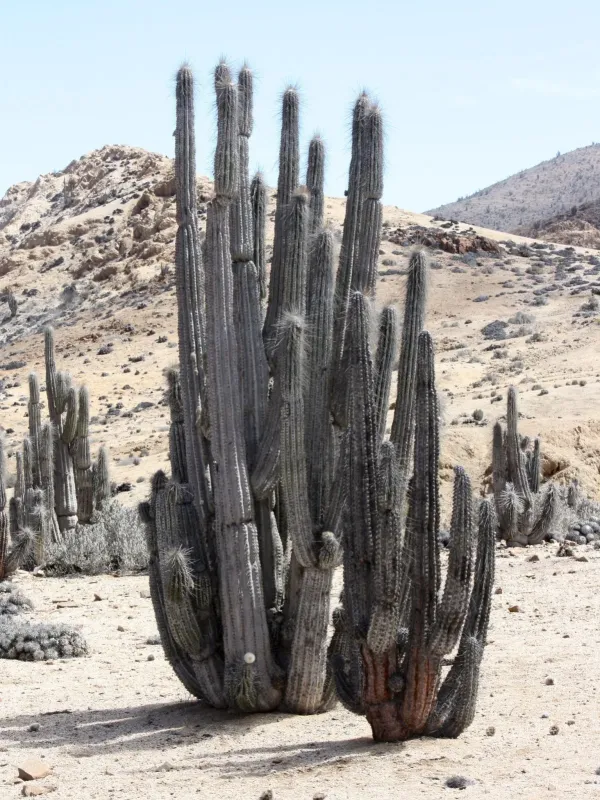
Description
Sowing dates
Propagation of Eulychnia iquiquensis in its natural environment occurs primarily through seeds. In cultivation, seeds should be sown in a well-draining, sandy-mineral substrate at temperatures no lower than 22–25 degrees Celsius.
Seeds require high humidity during the initial germination phase, but once seedlings emerge, watering must be significantly reduced to prevent rotting of the root neck.
Seed stratification is not mandatory; however, pre-sowing treatment with growth stimulants is recommended to increase germination rates.
Seedlings are pricked out when they reach a size of 1–2 centimeters, which typically happens in the second year after sowing due to the slow growth rate.
Cuttings are used less frequently because the plant is prone to heavy lignification of the stem, which complicates the rooting of side shoots.
Growing requirements
Eulychnia iquiquensis belongs to the Cactaceae family and is endemic to the Atacama Desert in Chile. It is a tree-like cactus adapted to extremely arid conditions, where coastal fogs known as "camanchaca" serve as the main water source.
The plant prefers rocky, nutrient-poor soils with excellent permeability. High levels of root system aeration are a critical condition for the culture's survival.
In greenhouses, the plant requires maximum solar exposure and good ventilation. Excessive air humidity without proper airflow quickly leads to the development of fungal infections.
The optimal temperature range is between 15 and 30 degrees Celsius. The culture can withstand short-term temperature drops but is extremely sensitive to prolonged frost combined with moisture.
Fertilizers must be strictly mineral, with low nitrogen content to avoid excessive tissue softening and stem sagging.
Yield
Economic use of the species is limited as it is not a mass agricultural crop. The fruits of Eulychnia are consumed by local populations as fresh food, possessing a specific, refreshing flavor.
Harvesting occurs during the natural fruit maturation period at the stem tips. Due to the difficulty of accessing natural habitats, commercial harvesting is not established.
The cactus biomass may be considered a potential raw material source for the cosmetic industry in its region of growth due to the high content of moisture-retaining substances in the pulp.
The plant also holds significant value for ornamental gardening, attracting collectors with its robust, tree-like structure and adaptability to harsh conditions.
The productivity of wild populations is low, so cultivation in specialized nurseries is viewed more as a means of biodiversity conservation and support for local exotic fruit markets.
Main diseases and pests
The primary threat to Eulychnia iquiquensis is root and stem rot, which occurs when watering regimes are violated and water stagnates in the root zone.
Among pests, mealybugs and spider mites cause the most significant damage, quickly infesting dense clusters of spines, which makes sanitation difficult.
Nematodes affecting the root system pose a serious problem for young plants grown in soil that has not been properly disinfected.
In the natural environment, damage is caused by animals feeding on succulent fruits, which limits natural population regeneration.
Disease prevention includes strictly observing a dry dormant period in winter and regular inspection of the epidermis for signs of insect activity.