
Eucheuma
Eucheuma
Eucheuma is a genus of red algae (Rhodophyta) within the Solieriaceae family. Native to the tropical waters of the Indo-Pacific, these macroalgae are highly valued for their role in the hydrocolloid industry, specifically for the production of carrageenan.
What the section contains

Eucheuma
For successful cultivation, Eucheuma requires a stable tropical climate with water temperatures typically between 25 and 30 degrees Celsius. High water quality and specific salinity levels are essential to maintain the physiological integrity of the thallus.
These plants are highly dependent on solar energy and are usually cultivated in shallow reef areas where sunlight can penetrate effectively. The depth of the farm is carefully managed to ensure the plants receive optimal light levels during different tidal stages.
Water movement is a critical requirement for Eucheuma farming. Moderate currents facilitate the uptake of nutrients from the surrounding sea and prevent the accumulation of silt, which would otherwise smother the plant and inhibit photosynthesis.
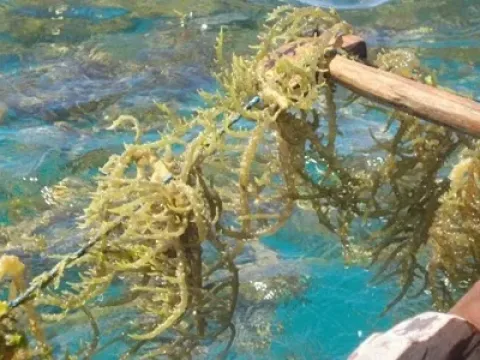
Agronomic techniques involve attaching vegetative fragments of the seaweed to nylon lines. These lines are secured to wooden or bamboo stakes in the seabed, allowing the seaweed to grow freely in the water column while remaining anchored in nutrient-rich zones.
The growth rate of Eucheuma is remarkably fast, allowing for frequent harvesting cycles. Under optimal environmental conditions, the biomass can double in size within a few weeks, leading to high annual yields per hectare of farm space.
Efficient management of the farm, including regular thinning and cleaning of the lines, is necessary to sustain high production rates. Depending on the site and species, farmers can achieve consistent harvests every 45 to 60 days throughout the year.
The most devastating condition for Eucheuma crops is the "ice-ice disease." This physiological disorder is often triggered by environmental stress, such as sudden drops in salinity or extreme heat, causing the thallus to lose pigment and eventually disintegrate.
Epiphytic algae often compete with Eucheuma for light and nutrients, significantly reducing the quality of the commercial yield. Farmers must regularly inspect the lines to remove these unwanted organisms to protect the health of the primary crop.
Grazing organisms, such as sea urchins and certain fish species, represent a constant threat to seaweed plantations. Protection measures, including the placement of farms in areas with low predator density, are vital to preventing significant stock loss.
Harvesting is primarily conducted by hand, where farmers selectively prune the mature branches of the seaweed. This method ensures that enough biological material remains attached to the lines to regenerate for the next growth cycle.
Once harvested, the seaweed is rinsed with seawater to remove debris and then spread out to dry in the sun. Sun-drying is the traditional and most cost-effective method to reduce moisture content to acceptable levels for international export.
The primary industrial product derived from Eucheuma is carrageenan, a natural polysaccharide. It is used globally in food processing, pharmaceuticals, and cosmetics as a thickening and stabilizing agent to improve the texture of various consumer goods.