
Eucheuma denticulatum
Eucheuma denticulatum
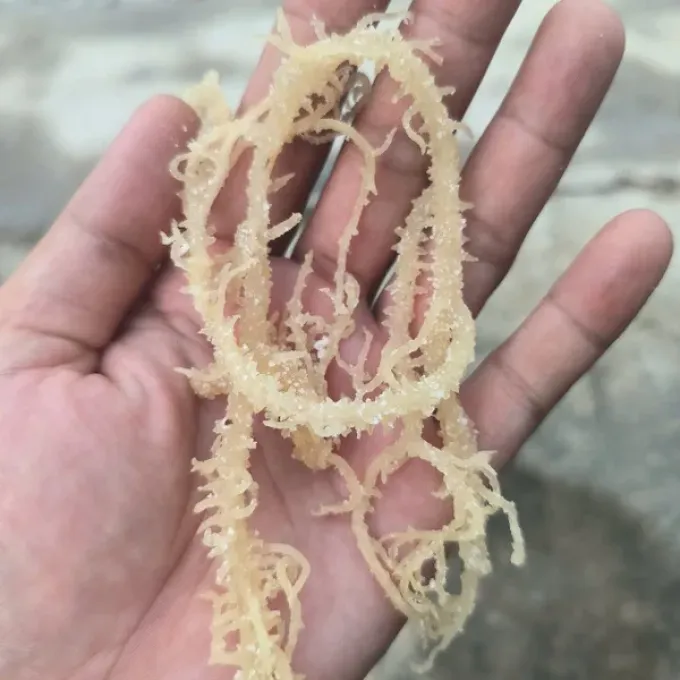
Description
Sowing dates
Eucheuma denticulatum is a tropical red seaweed belonging to the Solieriaceae family. In mariculture, the sowing process involves attaching vegetative cuttings of the thallus to long ropes or nets submerged in shallow coastal waters.
Farmers select healthy, rapidly growing fragments, typically weighing 50 to 100 grams, as the starting material. These cuttings are securely tied to polypropylene lines using plastic ties, ensuring they remain fixed despite ocean currents.
The selection of the planting site is determined by seasonal water temperature patterns. In equatorial regions, farming can proceed continuously, provided that temperature fluctuations remain within the optimal range for the species.
Vegetative propagation is the standard practice for this crop. By cloning the parent plants, farmers maintain consistent genetic traits, ensuring the resulting biomass is uniform and suitable for industrial processing.
Initial installation requires precise spacing between lines to prevent overcrowding. Proper management during the first few weeks is essential to ensure that cuttings establish well and begin active growth without detachment.
Growing requirements
This seaweed thrives in clear, shallow marine environments with temperatures between 25 and 30 degrees Celsius. Excessive heat or cold can trigger physiological stress, leading to growth suppression or crop death.
Salinity levels are critical, with an ideal range of 30–35 parts per thousand. The crop is highly sensitive to freshwater influx, which can cause tissue degradation, so farms are located away from estuaries or river mouths.
Sufficient sunlight is vital for photosynthesis. Farming structures are usually placed at depths where light penetration is high, typically not exceeding two meters during low tide to maximize energy intake.
Water movement is a primary requirement for nutrient uptake and metabolic waste removal. Areas with steady, moderate currents produce significantly higher biomass yields compared to stagnant or sheltered lagoons.
Water quality must be pristine. Agricultural, industrial, or urban runoff introduces pollutants that can be absorbed by the seaweed, rendering the final product unsuitable for food-grade carrageenan production.
Yield
Eucheuma denticulatum is noted for its high growth rate, often doubling its biomass in just 30 to 45 days. This makes it a highly efficient crop within the tropical mariculture industry.
Annual yields can reach massive proportions, with some well-managed farms producing over 30 tons of dry matter per hectare. The exact productivity depends on the frequency of cleaning and the quality of the nursery stock.
Harvest scheduling is crucial to yield optimization. Frequent, partial harvests encourage rapid regrowth and prevent the over-maturation of the seaweed, which can lower the concentration of carrageenan.
Yield is also influenced by the density of the ropes in the sea. An optimal layout allows for maximum light interception and nutrient circulation, preventing the growth of competing organisms that reduce harvest weight.
Post-harvest management—such as washing and proper drying—directly affects the final sellable yield. Minimizing physical loss during transportation from the sea to the drying racks is a key economic factor.
Main diseases and pests
The most devastating condition for this crop is the "ice-ice disease." It manifests as white, bleached segments on the thallus, followed by rapid tissue decay caused by environmental stress and microbial infection.
Herbivorous fish and sea urchins pose a constant threat to seaweed farms. They can graze heavily on the lines, requiring farmers to deploy protective mesh or netting to safeguard the crops from local marine wildlife.
Epiphytic algae and bacteria can colonize the surface of the seaweed, competing for nutrients and light. Routine maintenance, such as manual weeding or brief immersion in fresh water, is required to control these pests.
Environmental disasters like tropical storms and typhoons are major risks. Strong wave action can physically destroy the farming infrastructure and displace the seaweed, leading to total crop loss in affected areas.
- Ice-ice disease (bleaching and decay).
- Grazing by sea urchins and herbivorous fish.
- Overgrowth of competing epiphytic algae.
- Destructive wave action from storms.
- Water pollution and sedimentation.
Harvesting
Harvesting is performed by selective pruning, where a portion of the thallus is cut while leaving enough biomass for regeneration. This sustainable cycle allows for repeated harvesting from the same lines for several months.
Immediately after collection, the seaweed is washed in seawater to remove sand, debris, and small crustaceans. Cleanliness is paramount to meet the standards of the carrageenan extraction industry.
Drying is the next essential step, conducted on raised platforms or nets under direct sunlight. The platforms keep the seaweed off the ground, preventing contamination and promoting air circulation for faster drying.
The process continues until the moisture content reaches a stable level, usually around 30%. Properly dried seaweed is brittle and light-colored, indicating that it is ready for long-term storage or shipment.
Once dried, the seaweed is baled for easier handling and shipping to processing plants. Proper storage in dry, well-ventilated areas is required to prevent moisture re-absorption and mold growth.