
Eritrichium howardii
Eritrichium howardii
Description
Growing requirements
Eritrichium howardii is a specialized member of the Boraginaceae family, often referred to as a high-altitude cushion plant. It originates from the rugged and arid mountainous regions of North America, where it thrives in extreme, low-nutrient environments.
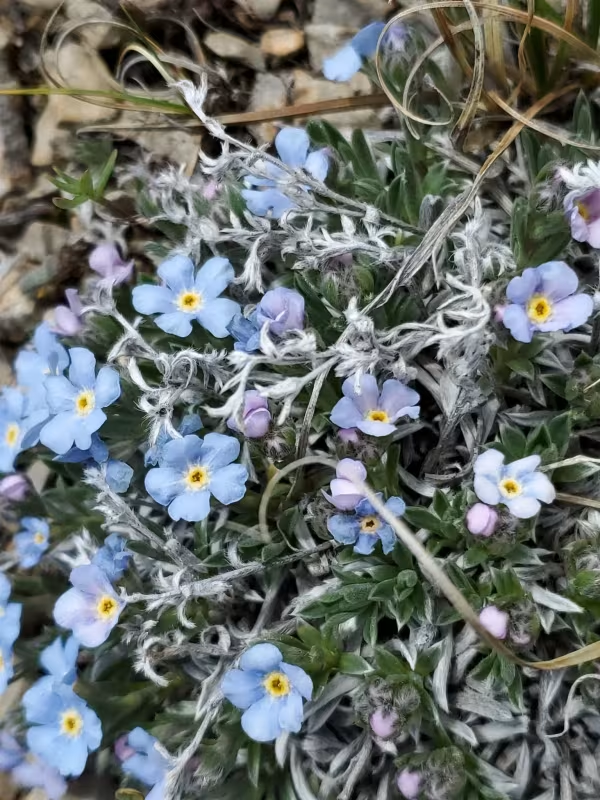
The botanical structure of this plant is defined by its compact, mound-forming habit. Its foliage is densely covered in fine, silky hairs, an evolutionary adaptation that allows the plant to reflect harsh solar radiation and conserve internal water reserves during periods of drought.
When cultivated, it requires precise environmental management. It necessitates a location with high light intensity but cool ambient temperatures. It is notoriously difficult to maintain in standard garden soils, requiring specialized substrates to mimic its natural mineral-heavy habitat.
The soil must provide perfect drainage; any accumulation of moisture around the base of the plant will lead to immediate physiological failure. Growers typically use deep, gravel-based planting media with a pH range that leans towards neutral or slightly alkaline levels.
Its primary agricultural and horticultural value lies in specialized rock garden cultivation. It is rarely grown for mass commercial production but serves as a premium specimen plant for botanical collections and alpine enthusiast societies worldwide.
Main diseases and pests
The primary threats to Eritrichium howardii involve improper irrigation and ventilation. Humidity-related issues, such as fungal damping-off, are the leading cause of loss during the transition from dormant to active growing seasons.
Pests are generally minimal if the plant is grown in proper conditions, though spider mites can emerge during dry, hot spells in greenhouses. Maintaining constant air movement and avoiding overhead watering are essential management strategies to prevent these biological risks.