
Chinese anemone
Eriocapitella hupehensis
Description
Growing requirements
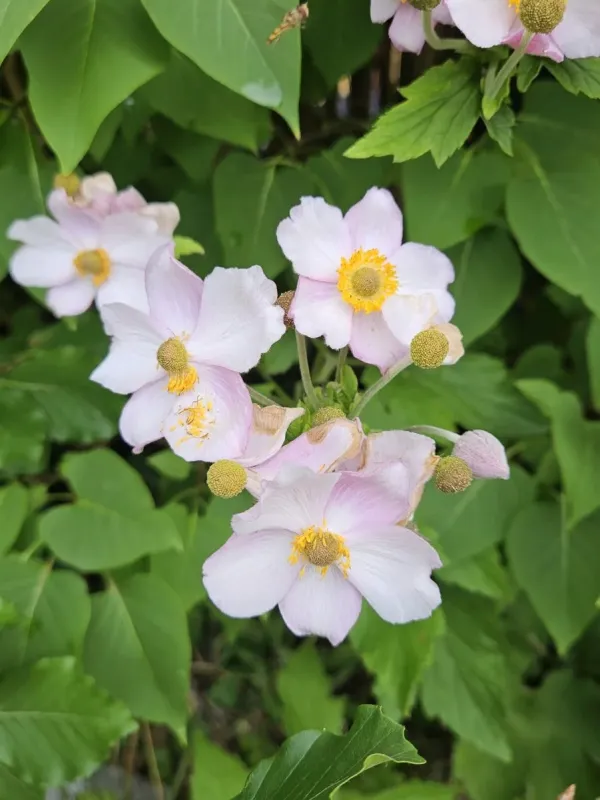
The Chinese anemone is a perennial herbaceous plant belonging to the Ranunculaceae family. It is highly valued in horticulture for its late-season flowering period, providing vibrant colors when many other perennials have faded.
Native to the mountainous regions of China, this species has successfully naturalized in many temperate zones worldwide. It is widely used in landscape design due to its architectural structure and reliable seasonal performance.
The plant thrives in partial shade, preferring sites that are protected from intense afternoon sunlight. It requires nutrient-rich, well-draining soil that retains sufficient moisture without becoming waterlogged.
Cultural requirements involve maintaining consistent soil moisture levels, especially during the peak growth months of summer. Adding organic matter to the planting site helps to improve soil structure and water retention capacity.
While the Chinese anemone is relatively cold-hardy, in harsher climates, it benefits from a protective layer of mulch applied in late autumn. This practice protects the root system from excessive temperature fluctuations and frost heave.
Main diseases and pests
The primary threats to this plant are fungal infections such as powdery mildew and root rot, which typically thrive in poor drainage conditions. Ensuring proper spacing between plants is crucial for air circulation.
Leaf nematodes pose a specific risk, often appearing as discoloration or malformation on the foliage. Monitoring the plants regularly allows for early detection and manual removal of infested leaves to prevent widespread damage.
Slugs and snails can be persistent pests during wet seasons, targeting tender young growth. Various trapping methods or organic deterrents can be employed to minimize damage to the foliage and flower buds.
Good sanitation practices, including the removal of infected plant debris at the end of the season, are essential for disease control. This reduces the overwintering potential for many pathogens and insect larvae.
In cases of severe infestation, targeted fungicide or pesticide treatments may be necessary. Always prioritize integrated pest management (IPM) strategies to maintain the health of the plant while minimizing chemical usage in the garden.