
Trailing arbutus
Epigaea gaultherioides
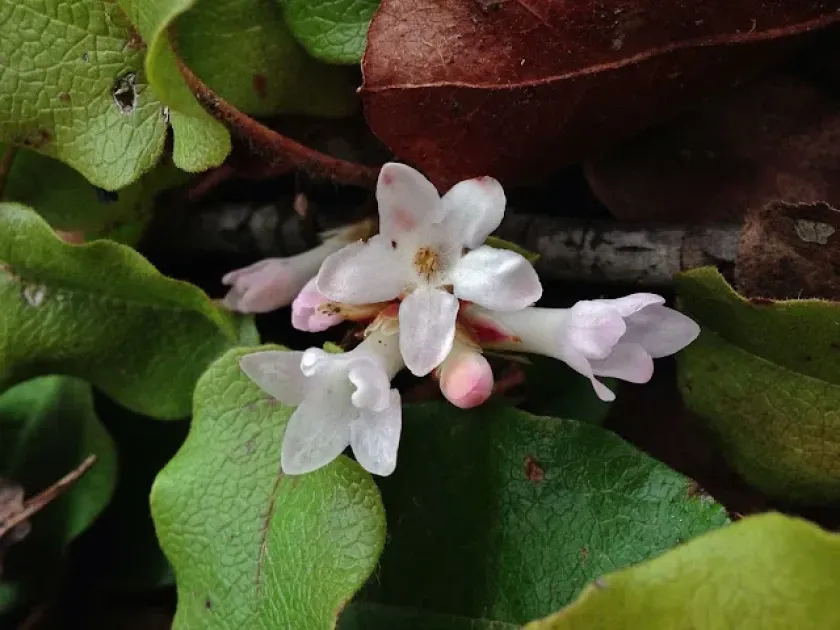
Description
Growing requirements
Epigaea gaultherioides is a distinguished member of the Ericaceae family, native to the mountainous regions of Turkey and Georgia. It is a slow-growing evergreen dwarf shrub known for its leathery leaves and fragrant flowers.
The plant strictly requires acidic soil conditions to thrive. A well-draining mixture of peat, pine needles, and grit provides the necessary environment for its delicate root system to develop properly.
Site selection is crucial for success, as the plant prefers cool, semi-shaded locations. Protection from intense midday sun is essential to prevent leaf scorching and desiccation during the warmer months.
Regarding moisture, the soil should be kept consistently damp but never waterlogged. Maintaining a steady microclimate around the plant helps mimic its natural subalpine habitat effectively.
Propagation is primarily done via cuttings or careful division in the spring. Due to its slow growth rate, the plant requires patience and minimal disturbance to establish itself in the garden.
Main diseases and pests
Root rot is the most common and destructive threat to this species, usually caused by improper soil drainage or overwatering. Once established, it is difficult to treat, making prevention paramount.
Fungal leaf spots can occur when air circulation is inadequate. Ensuring that the foliage stays relatively dry and the plant is spaced correctly can mitigate the risk of pathogen spread.
Pests like spider mites may infest the plant during prolonged dry spells. Frequent inspection of the undersides of the leaves allows for early detection and targeted management.
Chlorosis, indicated by yellowing leaves, is a clear sign that the soil pH has risen too high. Frequent monitoring and correction of soil acidity are necessary to keep the plant healthy.
Environmental stress, such as exposure to strong, drying winds in winter, can damage evergreen foliage. Protective covering with breathable material is recommended in regions with harsh winter climates.