
Epidendrum arachnoglossum
Epidendrum arachnoglossum
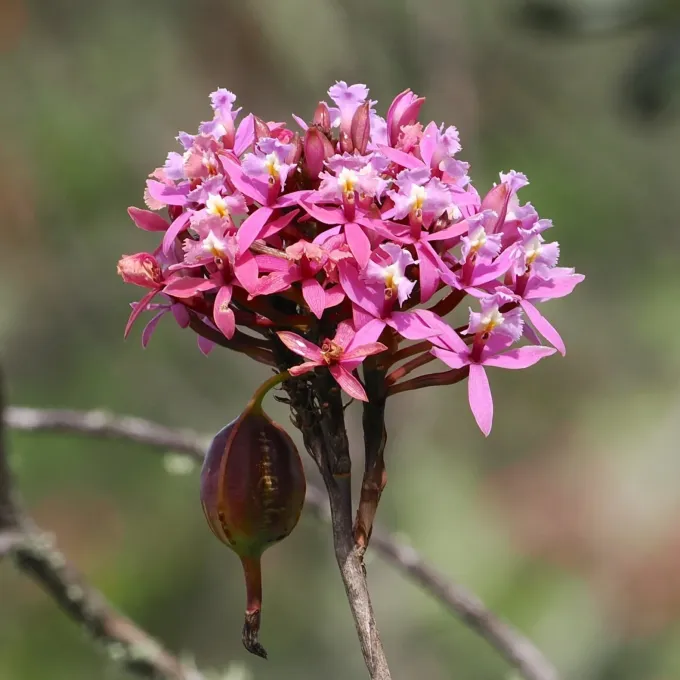
Description
Growing requirements
Epidendrum arachnoglossum is a striking member of the Orchidaceae family, valued for its complex and beautiful inflorescences in professional floriculture.
Native to the high-altitude regions of South America, this plant thrives in environments that provide consistent humidity and cool air circulation.
The cultivation of this species requires a well-lit location, avoiding direct midday sun, which can cause severe dehydration and scorching of the foliage.
An ideal substrate consists of a coarse mixture of orchid bark, perlite, and charcoal to ensure that the roots receive sufficient oxygen at all times.
Watering practices must balance the need for moisture with the necessity of drying out slightly between cycles to prevent the degradation of the root system.
Main diseases and pests
Common pests affecting this crop include spider mites, which flourish in dry indoor conditions and can quickly colonize the undersides of the leaves.
Root rot caused by Phytophthora or Pythium species is a significant threat that usually results from poor drainage or excessively heavy growing media.
Scale insects can attach themselves to the stems and leaf axils, sucking the plant sap and weakening the overall vitality of the orchid specimen.
Effective management strategies include the use of horticultural oils and systemic fungicides to maintain plant health throughout the growing season.
Regular sanitation of the growing environment is essential to prevent the spread of pathogens that thrive in the humid conditions preferred by orchids.