
Echinocystis macrocarpa
Echinocystis macrocarpa
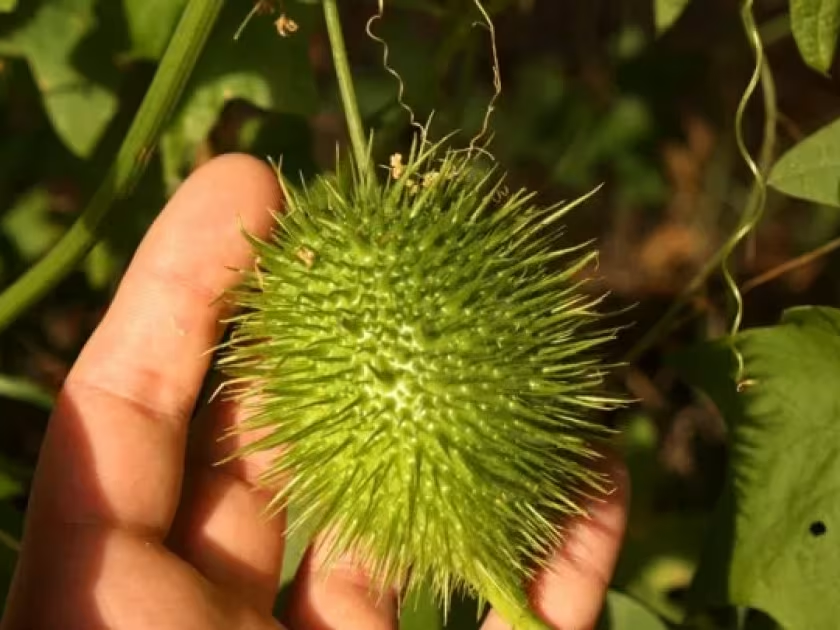
Description
Sowing dates
Sowing Echinocystis macrocarpa seeds is best performed after the risk of spring frost has completely passed. In most regions, this corresponds to late May, ensuring the soil has warmed up sufficiently to trigger germination.
Seeds of this species are characterized by a hard seed coat, making pre-sowing treatments like soaking in warm water for 24 hours highly beneficial. This method effectively shortens the emergence time and ensures more uniform crop density.
Seeds should be planted at a depth of 3–5 centimeters in well-prepared, friable soil. Proper spacing is crucial; maintaining at least 50 centimeters between plants allows for adequate ventilation and root competition management.
While direct sowing is common, utilizing biodegradable starter pots for greenhouse cultivation can provide a significant head start. This approach is highly recommended for growers in areas with shorter growing seasons.
When transplanting seedlings, it is vital to keep the root ball intact to prevent transplant shock, which can severely stunt the initial growth of the vigorous vine.
Growing requirements
As a member of the Cucurbitaceae family, Echinocystis macrocarpa is a fast-growing annual vine. It requires structural support, such as trellises or mesh netting, to reach its full vegetative potential.
The plant thrives in full sun but can tolerate partial shade if necessary. High fertility levels in the soil are essential; a rich loam with ample organic matter provides the best foundation for rapid stem elongation.
Moisture management is a critical aspect of the crop's agronomy. Due to the large surface area of its leaves, the plant loses water quickly and requires consistent irrigation to prevent wilting during peak summer temperatures.
Nutrient requirements include balanced fertilization throughout the growth cycle. A focus on nitrogen-rich inputs during the vegetative phase helps support the massive green biomass produced by this climber.
Site selection should also consider shelter from strong winds, as high-speed gusts can damage the fragile stems and tear the leaves, reducing the plant's overall health and aesthetic value.
Main diseases and pests
Powdery mildew is the most common pathological concern for this crop. It typically appears during periods of high humidity and poor air circulation, often leaving a white, dust-like residue on the foliage.
Root rot is a major risk factor associated with over-irrigation or soil compaction. Maintaining well-draining soil conditions is the most effective preventative measure against these soil-borne fungal pathogens.
Pests such as spider mites frequently attack the leaves during hot and dry spells. These mites thrive in low-humidity environments, so maintaining proper hydration is a key strategy for integrated pest management.
Aphid infestations may occur on the tender shoot tips. Monitoring the underside of leaves for early detection is recommended, as treating small populations is significantly easier than managing full-scale outbreaks.
Proper sanitation, including the removal of dead plant material at the end of the season, is essential to disrupt the life cycles of common pests and prevent the carry-over of diseases to subsequent planting cycles.