
Wild cucumber
Echinocystis lobata
Description
Sowing dates
Echinocystis lobata, commonly known as wild cucumber, is an annual climbing vine belonging to the Cucurbitaceae family. It is native to North America but has naturalized in many parts of the world.
The plant reproduces exclusively by seeds. Germination typically begins in early spring, as soon as the soil temperatures rise sufficiently to support active growth.
The seeds demonstrate high viability and can persist in the soil seed bank for several seasons, ensuring the reappearance of the plant in subsequent years.
Growth is extremely rapid, with vines capable of extending several meters within a single growing season. This rapid development allows the plant to outcompete other local vegetation.
In agricultural settings, it is rarely cultivated intentionally; instead, it is often managed as a weed due to its aggressive growth habits and potential for invasive spread.
Growing requirements
Wild cucumber thrives in moist, fertile soils. It is frequently found along riparian zones, forest edges, and areas with high water availability throughout the year.
While it prefers full sun for maximum growth, the plant is remarkably adaptable and can tolerate partial shade, making it a versatile grower in various habitats.
The vine requires vertical support to reach its full potential. Without fences, shrubs, or trees to climb, the plant will grow along the ground, which typically limits its spread.
Climatic conditions in temperate zones are optimal for this vine. It is frost-sensitive in the late autumn, which brings an end to its annual growth cycle.
Nutrient requirements are met through efficient root uptake. The plant benefits from nitrogen-rich environments, which further accelerate the formation of its large leaf canopy.
Main diseases and pests
Echinocystis lobata is remarkably resistant to many common diseases that affect other cucurbits. This resilience is a key factor in its successful colonization of new areas.
Few specialized pests significantly impact the health of the wild cucumber. Its aggressive nature often shields it from the negative impacts of minor insect infestations.
Ecological threats associated with the plant include its ability to form dense mats that shade out native plant species, thereby reducing local biodiversity.
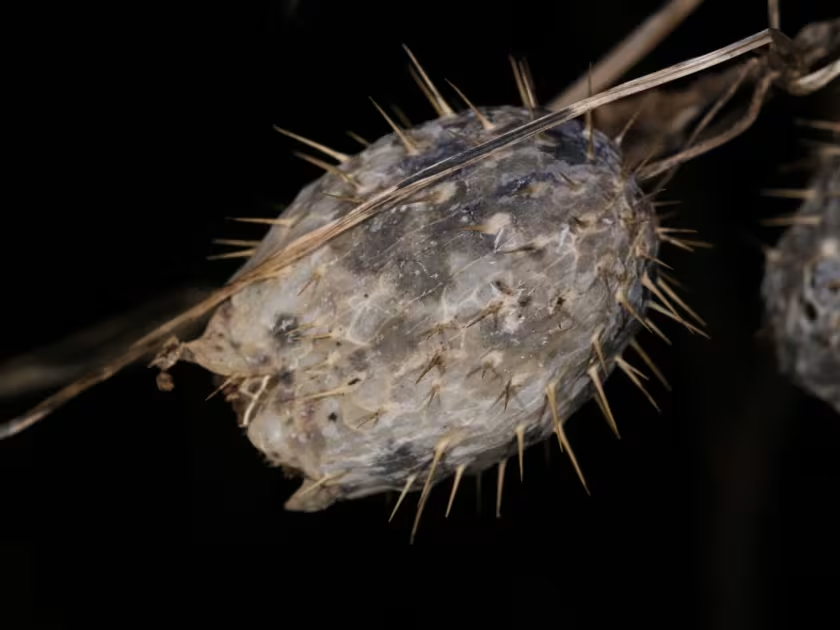
Management strategies focus on physical removal before the fruits reach maturity. Once the spiny pods produce seeds, eradication becomes significantly more difficult.
In cases of heavy infestation, systemic herbicides may be employed. However, caution is required to prevent off-target damage to desirable agricultural crops or native vegetation.