
Dracophyllum latifolium
Dracophyllum latifolium
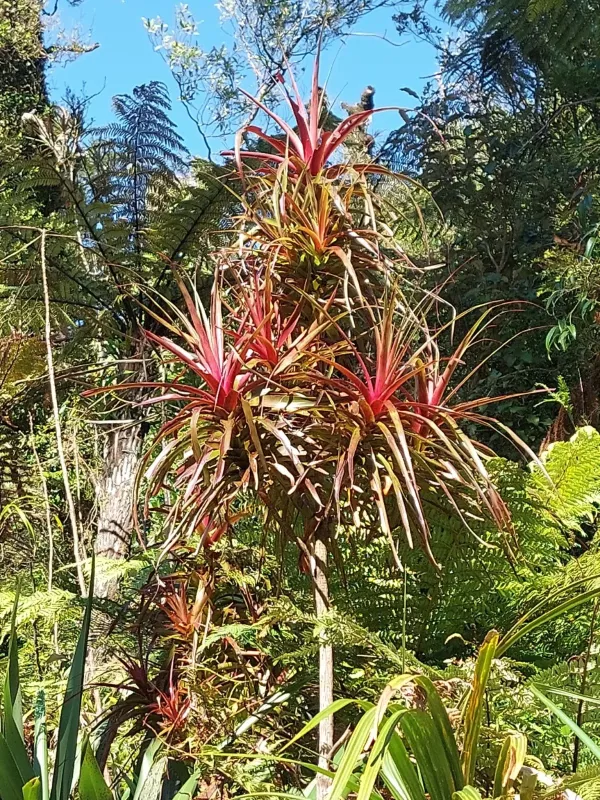
Description
Growing requirements
Dracophyllum latifolium, commonly known as the needle-leaf mountain neinei, belongs to the Ericaceae family. It is a striking plant native to the diverse forest ecosystems of New Zealand.
The plant thrives in cool, humid environments with partial shade. In its natural habitat, it develops best under the forest canopy, which protects it from intense solar radiation.
Cultivation requires well-drained, acidic soil rich in organic matter. Gardeners must ensure that the growing medium does not become waterlogged, as the root system is highly susceptible to decay.
Botanically, it is a slow-growing evergreen shrub or small tree characterized by a terminal rosette of long, strap-like leaves. The flowering stage produces impressive, dense, pendulous racemes.
In landscaping, this species is highly valued for its structural architectural form. It is frequently utilized in specialized collections, botanical gardens, and conservatories where its exotic appearance is a focal point.
Main diseases and pests
The primary threat to Dracophyllum latifolium is root rot, typically caused by overwatering or soil that lacks adequate drainage properties.
Leaf spot diseases can occur during prolonged periods of high humidity and poor air circulation, necessitating a dry environment around the foliage.
Pests such as scale insects may manifest, particularly on indoor specimens or in greenhouses where the environment is stable and lacking natural predators.
Spider mites are another common challenge, especially in environments where the ambient air humidity drops too low for the plant's physiological needs.
Effective management involves maintaining optimal moisture levels, ensuring proper plant spacing for airflow, and early detection of potential insect infestations.