
Distimake tuberosus
Distimake tuberosus
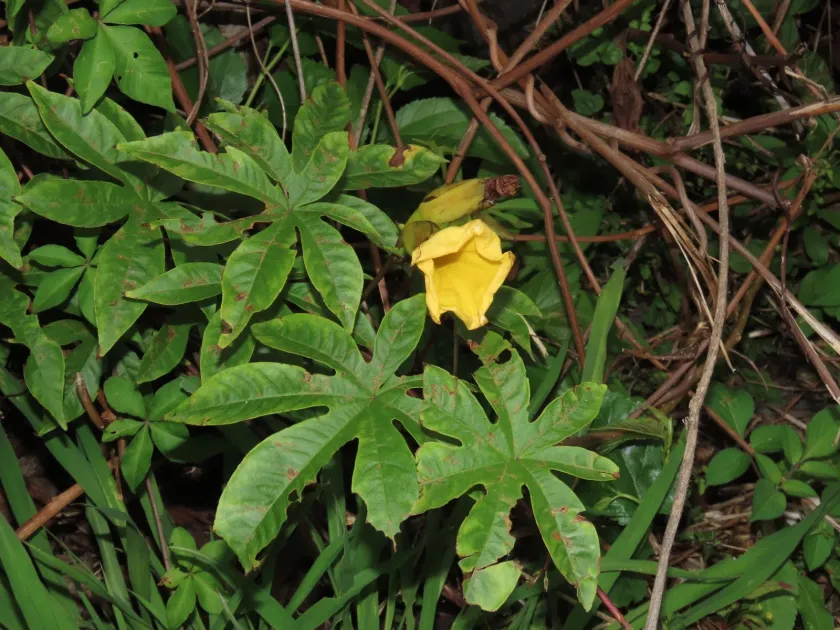
Description
Sowing dates
Planting of Distimake tuberosus is primarily carried out during the spring period, once the soil has warmed sufficiently and the risk of night frosts is minimized.
The plant can be propagated both by seeds and vegetatively, using segments of the rhizomes, which speeds up the rooting process in open ground conditions.
Seeds require pre-soaking to improve germination, as their seed coat is characterized by high density and hardness.
In commercial cultivation, planting is conducted following a specific layout that ensures enough space for the development of long, vining stems.
It is essential to provide support or trellises immediately at the time of sowing, as the crop exhibits a strong climbing growth habit from early stages of vegetation.
Growing requirements
Distimake tuberosus is a tropical plant that requires consistently high temperatures for normal development of its vegetative mass.
The crop prefers well-drained, fertile loamy or sandy soils with a neutral or slightly acidic pH level.
Sufficient solar illumination is necessary for the proper formation of tubers, as the intensity of organic matter accumulation drops sharply in deep shade.
Agricultural practice includes regular irrigation during active growth periods, although water stagnation at the roots is unacceptable as it triggers the rotting of tuberous structures.
The plant responds well to the application of organic fertilizers, which stimulate the development of a powerful root system and starch accumulation in the tubers.
Yield
The yield of Distimake tuberosus depends on the duration of the growing season and the quality of agricultural care provided to the plantings.
In favorable tropical climate conditions, the crop is capable of forming large, massive tubers suitable for processing and human consumption.
Its economic value lies in the high content of starch and other nutrients, making it a potentially significant starchy crop.
By maintaining a proper irrigation and fertilization regime, one can achieve stable indices of gross harvest of marketable product per unit area.
Productivity indicators also depend on varietal traits and the quality of planting material used when establishing the plantation.
Main diseases and pests
The most serious threat to this crop is posed by various types of root rot, which develop when drainage is poor or the soil becomes waterlogged.
Pests such as spider mites and aphids can attack the foliage, leading to plant weakness and a decrease in photosynthetic intensity.
Under high humidity conditions, fungal diseases may appear on the leaves, requiring the use of preventive fungicide treatments.
To protect against soil pests, it is necessary to conduct regular weeding and inter-row cultivation, which also contributes to better root aeration.
Compliance with crop rotation rules is a mandatory condition for preventing the accumulation of soil-borne infections and reducing the pressure of pathogenic microflora.
Harvesting
Harvesting of the tubers is conducted after the complete drying of the aerial part of the plant, when all plastic substances have relocated into the underground storage organs.
Tubers must be extracted from the soil carefully to avoid mechanical damage, as any cuts reduce storage life and the quality of the commercial product.
After digging, the harvest is dried in a place protected from direct sunlight, which promotes the healing of small surface wounds on the tubers.
Storage of the harvested produce is carried out in cool, dry rooms with good ventilation to prevent premature sprouting or spoilage.
Harvest timing is determined by regional climate peculiarities; it is important to complete all work before the onset of the rainy season or the first cold weather.