
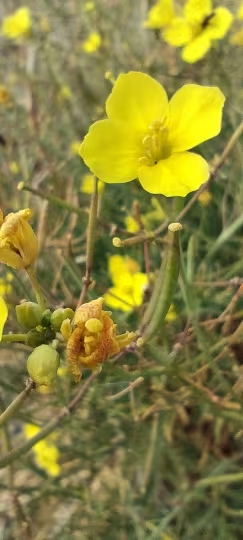
Description
Sowing dates
Perennial wall-rocket, often referred to as wild arugula, is a hardy herbaceous plant belonging to the Brassicaceae family. Seeds are typically sown in early spring as soon as the soil reaches a temperature of 8–10 degrees Celsius, or in late summer for a second harvest.
The seeds are extremely small and should be sown at a shallow depth of approximately 0.5 to 1 cm. For optimal field production, rows should be spaced 20–30 cm apart to ensure proper airflow and to facilitate mechanical weeding and maintenance.
To ensure a continuous supply of fresh leaves, commercial growers often employ a staggered sowing schedule, planting new batches every 14 to 20 days. This rotation method maximizes land utility and ensures consistent product availability throughout the growing season.
Germination usually occurs within 7–10 days under favorable moisture conditions. Once seedlings reach the stage of two or three true leaves, thinning is necessary to maintain a spacing of 10–15 cm between plants, which promotes robust rosette development.
In intensive greenhouse setups, plug-tray seedling production is common. Transplanting established seedlings into the final growing medium allows for more precise control over plant density and significantly shortens the production cycle compared to direct seeding.
Growing requirements
The crop thrives in well-drained, fertile soil, preferably sandy loam or loamy textures. A neutral to slightly alkaline soil pH is crucial, as the plant does not perform well in acidic conditions, which may hinder nutrient uptake and overall vitality.
While the plant exhibits some drought tolerance, consistent moisture is required to produce high-quality, succulent leaves. Water stress often causes the plant to produce sharper, more bitter leaves and can trigger premature bolting, rendering the harvest unmarketable.
An ideal temperature range for vegetative growth is between 18 and 22 degrees Celsius. Extended periods of high heat combined with long daylight hours often accelerate the plant's transition to the flowering phase, which stops leaf production.
Proper crop rotation is essential for disease management. Avoid planting wall-rocket after other Brassicaceae crops, such as cabbage or mustard, to minimize the risk of soil-borne pathogens and to maintain soil nutrient balance for optimal growth.
Nitrogen management is vital for leaf quality. Excessive nitrogen application can lead to high nitrate accumulation in the foliage. It is best to incorporate well-rotted organic matter into the soil prior to planting to provide a steady supply of nutrients.
Yield
Yield potential is highly dependent on environmental conditions and management practices. In an open field, one can expect a yield of 1.5 to 3 kilograms of marketable greens per square meter per season, depending on the cutting frequency.
Greenhouse-grown crops under controlled environmental conditions can achieve much higher yields. Using hydroponic or intensive soil-based systems allows for multiple cuts throughout the year, significantly increasing the total annual output per unit area.
Maximizing yield involves careful plant spacing and timely maintenance. Uniformly spaced, well-nourished plants produce large, vibrant rosettes. Proper irrigation and weeding ensure that energy is directed toward leaf growth rather than competing with weeds.
The harvestable yield is extended through selective cutting techniques. By harvesting the outer leaves while leaving the central growing point intact, the plant can regenerate new foliage several times, prolonging the productive life of the planting.
Commercial grading is based on leaf size, color, and lack of damage. Providing optimal growth conditions ensures the product meets high market standards, characterized by a deep green color and the distinct, spicy flavor for which the crop is valued.
Main diseases and pests
The crucifer flea beetle is the most significant pest for perennial wall-rocket. These small insects can rapidly damage young seedlings. Protective row covers are highly effective in preventing flea beetle damage during the early stages of plant growth.
Downy mildew can become an issue in environments with high humidity and poor air circulation. Improving greenhouse ventilation and ensuring that leaves remain dry during the night can significantly reduce the incidence of fungal outbreaks.
Clubroot is a serious soil-borne threat that affects the roots and stunts plant growth. Maintaining a proper pH level through liming and adhering to strict crop rotation cycles are the primary methods for preventing this devastating disease.
Aphids may infest the underside of leaves, especially during warm, stagnant weather. Biological control methods, such as introducing predatory insects or using gentle, soap-based sprays, are effective ways to manage infestations without leaving residues.
Slugs and snails can cause damage to the foliage, particularly in damp conditions. Keeping the area surrounding the beds clear of debris and using physical barriers helps keep these pests away from the tender salad greens.
Harvesting
Harvesting generally begins when the leaves reach a length of 10–12 cm, typically about 30–45 days after seeding. Monitoring the crop closely is essential to ensure harvesting occurs before the plant begins to produce flower stalks.
The best time to harvest is in the early morning when the leaves are turgid and cool. This preserves the freshness and quality of the greens, ensuring they have a longer shelf life after they are removed from the field.
Leaves are typically cut by hand or using specialized harvesting equipment. Once cut, the greens should be cooled immediately and packed in containers that allow for adequate airflow to prevent spoilage and maintain their crisp texture.
Storage should be maintained at a temperature of 0–2 degrees Celsius. Under these cold chain conditions, the product can remain fresh for up to a week, though it is usually sold as quickly as possible to ensure maximum culinary appeal.
Regular cutting prevents the plant from bolting and encourages the development of new, tender growth. If the plant is allowed to grow too large, the older leaves become leathery and the flavor becomes too pungent for most consumer tastes.
Reference
Connections · Perennial wall-rocket
Most often together:
Marketplace