
Wall rocket
Diplotaxis muralis (L.) DC.
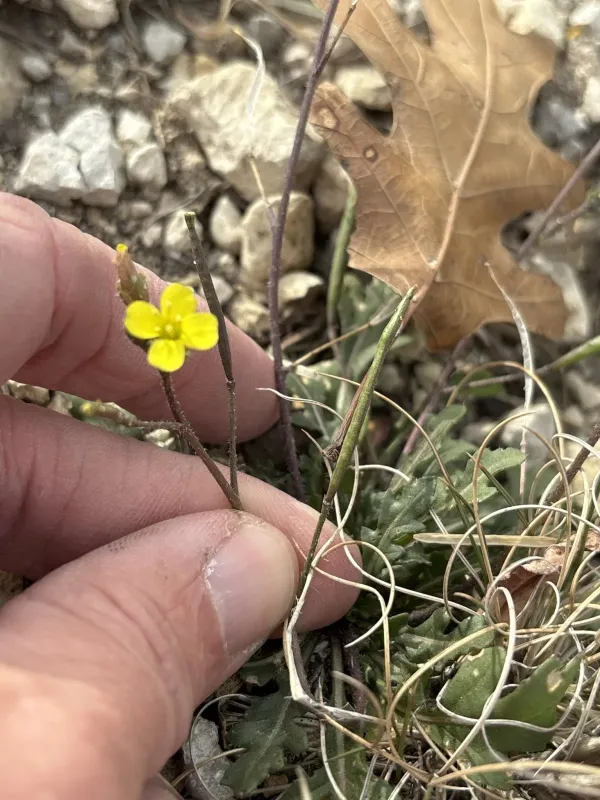
Description
Sowing dates
Wall rocket is typically sown in early spring as soon as the soil temperatures rise above 5–8 degrees Celsius to encourage rapid germination.
Autumn sowings are also possible in milder climates, providing early growth and overwintering potential for a harvest in the following spring.
Seeds should be broadcast or sown in rows spaced 20–30 cm apart to ensure adequate space for the rosette development and proper air circulation.
The sowing depth is shallow, around 0.5–1 cm, as the seeds are fine and require surface stability to avoid deep burial and potential rot.
Light compaction of the soil post-seeding is recommended to ensure consistent moisture contact with the seeds, which is vital for uniform emergence.
Growing requirements
As a member of the Brassicaceae family, Wall rocket is highly adaptable to various soil types, preferring well-drained, neutral to alkaline conditions.
It thrives in full sunlight, which is necessary to maintain the plant's characteristic peppery flavor and vigorous development of the leaf rosette.
While the plant shows good drought tolerance, regular irrigation is highly beneficial for improving the crispness and tenderness of the harvested leaves.
Wall rocket can grow in relatively poor soils, making it an excellent candidate for gardens with limited nutrient availability and varied geological profiles.
Optimal growth is observed in cooler climates, although it performs sufficiently in moderate summer heat provided that moisture levels are managed.
Yield
The yield potential is high due to the plant's capability to regenerate new foliage multiple times after the primary harvest is conducted.
Consistent leaf production depends on the frequency of cutting; removing leaves stimulates the plant to sprout new ones from the central rosette.
The flavor profile, described as nutty and mustard-like, makes it a premium product for the micro-green and gourmet salad market segments.
Productivity is optimized by maintaining a consistent density of plantings, which allows for maximum yield per square meter of cultivated land.
Careful management of the harvest cycle ensures that the plant does not bolt into seed prematurely, which would otherwise terminate the leaf harvest.
Main diseases and pests
Flea beetles are the most significant pest for Wall rocket, often causing rapid damage to young foliage during warm, dry weather conditions.
Pathogens such as powdery mildew can affect the crop if the planting density is too high or if there is poor drainage leading to waterlogged soil.
Effective management includes implementing a strict crop rotation system to prevent the buildup of soil-borne diseases typical for Brassicaceae plants.
Biological control methods and row covers are effective tools for managing pest populations without resorting to heavy chemical interventions.
Regular monitoring for aphid colonization is crucial, especially during the peak spring growth season when environmental conditions favor pest development.
Harvesting
Harvesting begins when the plant reaches a height of 10–15 cm, using a sharp blade to cut leaves while preserving the crown for regrowth.
It is essential to remove any emerging flower stalks promptly to ensure the energy of the plant remains focused on vegetative rather than reproductive growth.
After harvesting, the leaves must be rapidly cooled to dissipate field heat and reduce metabolic rates, thereby preventing wilting and quality loss.
Packaging for market should prioritize cool-chain logistics, keeping the product at near-zero temperatures to extend shelf life for several days.
Mechanical handling during the harvest should be minimized to avoid bruising, which quickly leads to oxidation and decreased market value.