
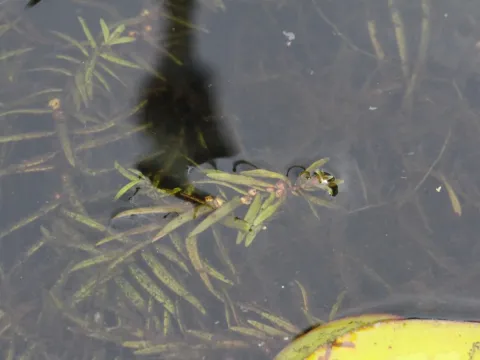
Didiplis
Didiplis
Didiplis, specifically the species Didiplis diandra, is a fascinating aquatic plant belonging to the Lythraceae family. While not a commercial field crop, it is a highly prized botanical specimen in the hobby of aquascaping due to its dense, needle-like foliage.
What the section contains

Didiplis
Originating from North America, this plant is naturally found in shallow wetlands and slow-moving streams. In an aquarium, it serves as a mid-ground or background plant, valued for its ability to turn deep shades of copper and red under optimal conditions.
The plant demands high light intensity, typically requiring 0.5 to 1.0 watts per liter of LED or fluorescent lighting. Without sufficient photons, the plant will shed its lower leaves and eventually disintegrate from the bottom up.
A consistent supply of CO2 injection is essential for Didiplis to thrive. It also benefits significantly from a nutrient-rich substrate and regular water column fertilization, particularly with iron and trace elements to maintain its characteristic vibrant color.
Water chemistry is a critical factor for success. It prefers soft to medium-hard water with a pH level between 6.0 and 7.0. Fluctuations in these parameters often cause the plant to stop growing or suffer from stunted, deformed apical growth.
The primary threat to Didiplis is competition with algae. Because it grows relatively slowly compared to many other stem plants, it can be easily overwhelmed by hair algae or black beard algae if the nutrient-to-light balance is not strictly maintained.
Mineral imbalances frequently manifest as leaf deformation. A deficiency in potassium or iron often leads to the tips of the plant becoming brittle or losing their pigmentation, which significantly lowers the aesthetic value of the planting.
Physical stress from frequent re-planting or handling can weaken the stems, as they are notably fragile. It is recommended to handle the plant gently and avoid placing it in areas with very strong current, which could uproot the shallow system.
Inadequate water circulation around the base of the plant can lead to the accumulation of detritus. This stagnant environment promotes anaerobic bacterial growth, which can lead to stem rot at the substrate level.
While Didiplis is not prone to traditional agricultural pests, the introduction of aquatic snails or excessive organic matter can lead to physical tissue damage, necessitating a balanced maintenance schedule to keep the plants healthy.