
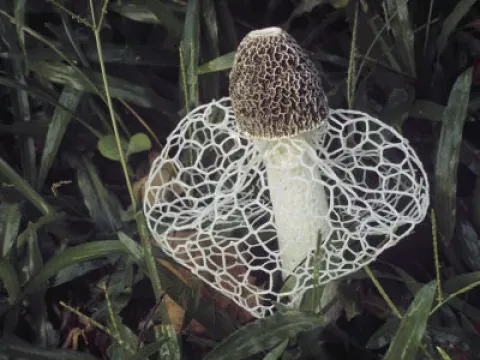
Bamboo mushroom
Dictyophora
The Bamboo mushroom (Dictyophora indusiata) is a fascinating member of the Phallaceae family. It is renowned for its delicate, net-like veil, which has made it a prized ingredient in East Asian culinary traditions for centuries.
What the section contains

Bamboo mushroom
Cultivation requires a highly controlled tropical environment. Ideal growing conditions necessitate temperatures maintained between 20°C and 30°C, combined with high humidity levels ranging from 85% to 95% throughout the entire growth cycle.
The substrate should consist of a mixture of hardwood chips, straw, and well-composted organic matter. Sterilization of the substrate is a mandatory step to prevent the introduction of competing fungi that can stifle the growth of the Dictyophora mycelium.
Proper aeration is essential for the healthy development of the fungal primordia. While high humidity is required, standing water must be avoided to prevent bacterial rot and the collapse of the delicate fruiting structure.
Technicians must monitor the pH levels of the soil periodically. A balanced pH environment allows the mushroom to efficiently draw nutrients from the lignocellulosic materials provided in the cultivation blocks.
Yield estimation is primarily based on the biological efficiency of the mycelial strain. A well-managed indoor farm can produce consistent flushes of fruiting bodies over a span of several months.
Strategic temperature drops can be used as a trigger for the formation of fruiting bodies. Consistent output is achieved by staggering the inoculation of substrate bags to ensure a continuous harvesting schedule.
The biggest threat to production is the contamination by green mold (Trichoderma). Once introduced, it spreads rapidly and can destroy an entire batch of cultivation blocks within a few days.
Pests such as fungus gnats pose a significant risk, as they act as vectors for diseases and physically damage the fruiting bodies. Use of sticky traps and non-toxic biological controls is standard practice in professional facilities.
Harvesting must occur during the very narrow window of time when the veil is fully extended. If harvested too late, the mushroom loses its structural integrity and the strong, distinctive odor becomes too overpowering for market standards.
Post-harvest processing involves immediate cleaning, slicing, and drying. Properly dried bamboo mushrooms retain their medicinal properties and are highly sought after by the global gourmet food and pharmaceutical industries.