
Bamboo fungus
Dictyophora indusiata (Ventenat:Persoon) Fischer
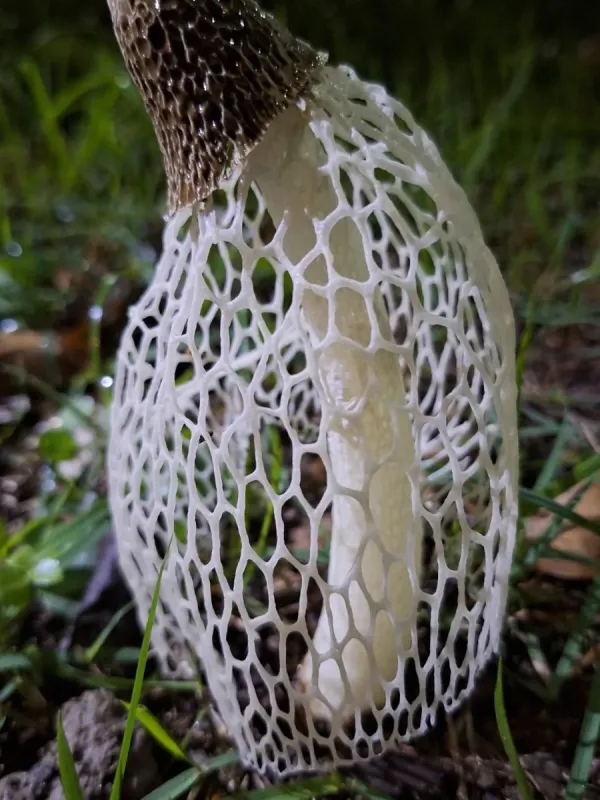
Description
Sowing dates
The bamboo fungus (Dictyophora indusiata) requires specific conditions for inoculation. The mycelium is sown into a prepared substrate composed of hardwood chips, sawdust, and plant residues that mimic a natural forest floor.
The best time for inoculating the spawn is in the spring, when soil temperature stabilizes between +18°C and +22°C. In commercial settings, sterile blocks are used and kept in darkness until fully colonized by the mycelium.
A crucial step is proper bed preparation, maintaining a substrate moisture level of around 65–70%. The mycelium is planted at a depth of 5 to 10 centimeters, depending on the substrate's density.
As a saprotrophic organism, this fungus efficiently utilizes organic substrates rich in lignin and cellulose. When growing indoors, adequate ventilation must be provided to prevent the growth of competitive mold species.
After inoculation, the surface of the substrate is covered with a layer of moist moss or peat, which prevents dehydration and creates a favorable microclimate for the development of the fruit bodies.
Growing requirements
The culture belongs to the Phallaceae family and originates from tropical and subtropical regions across Asia, Africa, and the Americas. The fungus requires high relative humidity, never dropping below 80%.
The temperature for the formation of fruit bodies should range from +22°C to +28°C. Sudden temperature fluctuations negatively affect the fungus's ability to form its characteristic lace-like veil, known as the indusium.
The soil or substrate must be rich in organic matter, with a pH level between 5.5 and 7.0. Ensuring good aeration of the substrate is essential, as excessive compaction will inhibit mycelial growth.
Light intensity is not a critical factor, though diffused light helps in the proper formation of the cap's pigmentation. Direct sunlight is harmful to the delicate tissues of the fruit body.
In closed indoor environments, automatic humidification systems are mandatory, as the bamboo fungus is extremely sensitive to dry air, which causes rapid deformation of the cap.
Yield
Yields for the bamboo fungus depend on the quality of the substrate and adherence to inoculation protocols. On average, one square meter of growing area produces 2 to 4 kilograms of fresh mushrooms per season.
Fruiting occurs in "waves," with intervals ranging from 3 to 5 weeks. It is critical to harvest the mushrooms promptly, as the life cycle of a mature specimen lasts only a few hours.
To increase output, small doses of nitrogen fertilizers are used in the early stages to stimulate mycelial vegetative growth. The crop is highly profitable due to its significant value in pharmacological markets.
Stable yields are possible only if the integrity of the mycelial layer within the substrate is maintained. Frequent physical disturbance of the beds can lead to a decrease in overall production.
There is a direct correlation between watering intensity and the weight of the fruit bodies; however, over-watering may cause the stem of the mushroom to rot.
Main diseases and pests
Bacterial rot is the primary threat to cultivation, especially in high-humidity conditions, affecting the stem of the mushroom. It manifests as tissue darkening and a foul odor.
Soil nematodes pose a serious risk to the mycelium, gradually destroying it and reducing yields. Combating them requires thorough disinfection of the substrate before inoculation.
Mold fungi (Trichoderma spp.) are the main competitors for nutrients. They quickly colonize the substrate if temperature control or sterility is compromised.
Fungus gnat larvae can damage young primordia, making the mushrooms commercially unmarketable. The use of sticky traps and maintaining general hygiene are standard control methods.
- Slug damage in open-field cultivation.
- Pathogenic yeast development during waterlogging.
- Bacterial infection risks at high planting densities.
Harvesting
Harvesting the bamboo fungus requires extreme caution and speed. The fruit body grows very rapidly, reaching full maturity just a few hours after emerging from the egg-like state.
The most valuable stage is when the mushroom has fully unfurled its lace-like skirt but has not yet lost its firmness. Any delay leads to a rapid loss of product quality.
Mushrooms are harvested with a sharp knife at the base, taking care not to disturb adjacent primordia in the substrate. Wearing gloves is recommended to avoid leaving marks on the fragile cap surface.
After harvesting, the mushrooms must be processed immediately, as they contain high water content and degrade quickly at room temperature. The preferred processing method is drying in dehydrators at temperatures up to +45°C.
Once dried, the bamboo fungus retains its unique nutritional profile and is highly sought after in traditional medicine and cuisine, maintaining its commercial quality for a long time.