
Dicksonia lanata
Dicksonia lanata
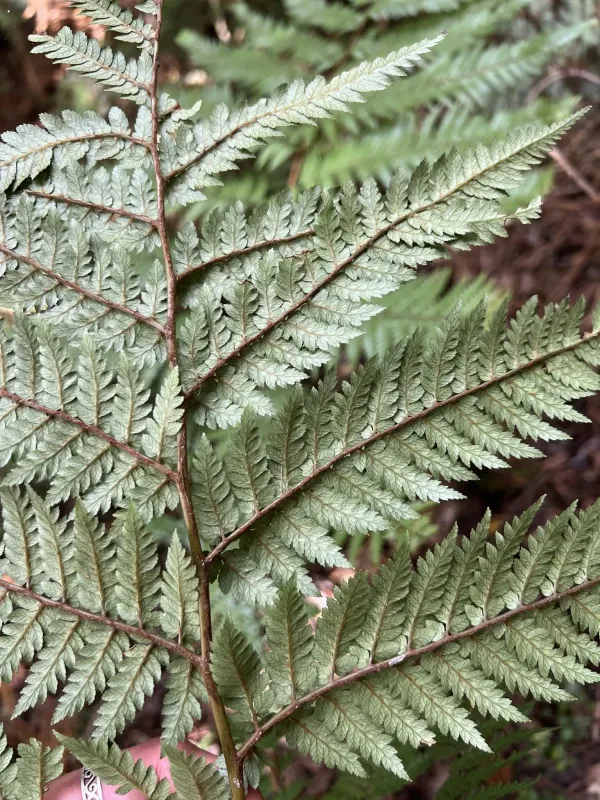
Description
Growing requirements
Dicksonia lanata, commonly known as the woolly tree fern, is a member of the Dicksoniaceae family native to New Zealand. It is a slow-growing species typically found in dense forest understories where moisture levels remain consistently high throughout the year.
Botanically, this fern is recognized by its stout trunk covered in soft, hair-like fibers which provide protection and moisture retention. Its fronds are wide and leathery, arching gracefully to form a canopy that thrives in the filtered light of its native habitat.
To cultivate Dicksonia lanata successfully, one must replicate its natural humid environment. It requires high atmospheric humidity and protection from drying winds, which can quickly cause leaf desiccation and severe stress to the plant.
The soil should be a well-draining, organic-rich mix. Growers often use a combination of peat moss, pine bark, and perlite to ensure the roots remain aerated while retaining sufficient moisture. It is crucial to prevent the medium from becoming compacted or waterlogged.
Temperature management is critical as this species is not fully frost-hardy. In regions outside its natural range, it is kept as a greenhouse or conservatory plant, where winter temperatures are kept just above freezing to maintain active health and prevent dormancy stress.
Main diseases and pests
Common pests include scale insects and spider mites, which thrive in low-humidity environments often found indoors. Regular monitoring and physical removal or appropriate horticultural soaps are recommended to keep infestations at bay without damaging the sensitive fronds.
Fungal issues, such as crown rot, often result from poor drainage or stagnant water collecting in the center of the crown. Providing adequate air circulation and careful watering techniques, specifically avoiding wetting the crown directly, are essential preventive measures.